

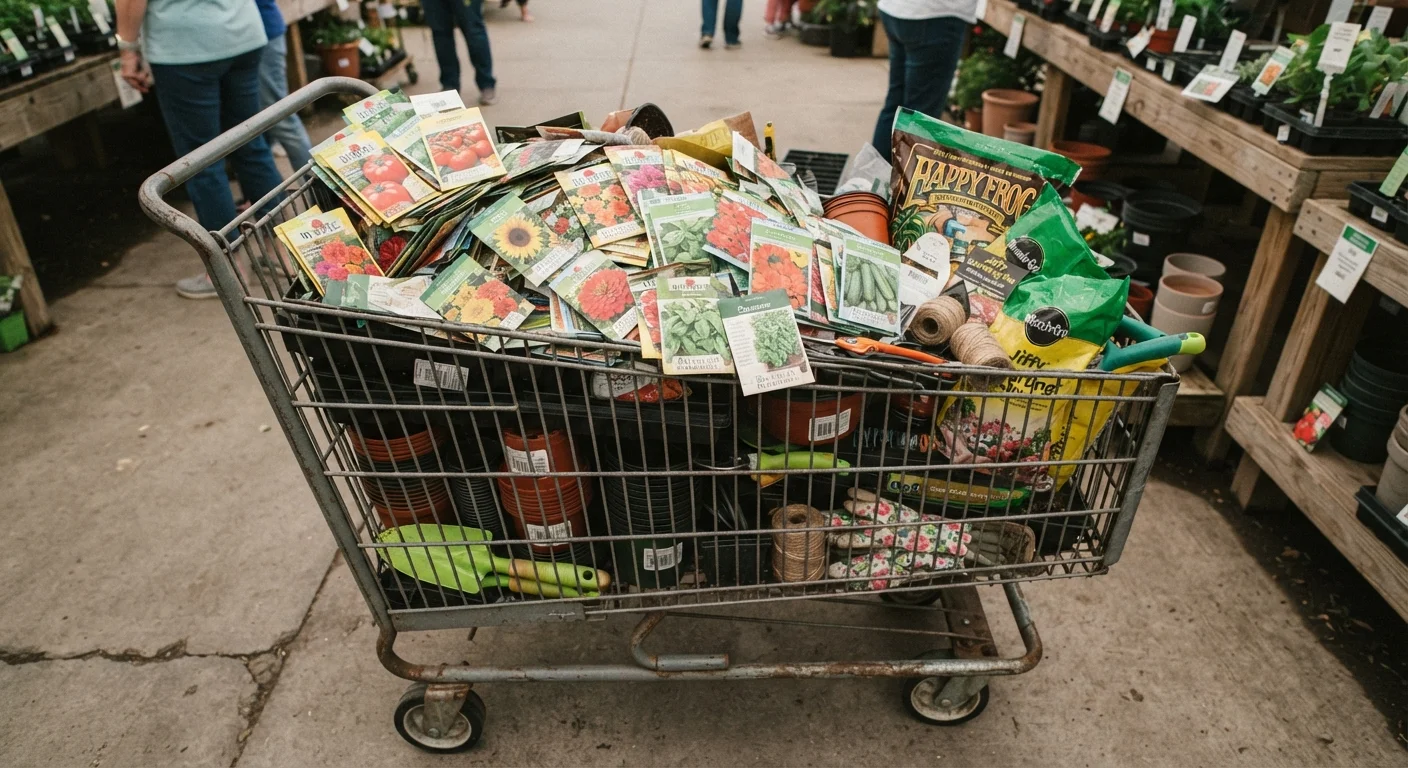
Where the first-year budget actually goes
A first vegetable garden can realistically cost anywhere from $50 to over $500 before a single tomato ripens. The wide range is not about garden size. It is about the decisions made at the garden center before any soil is turned. New gardeners tend to buy in three categories: infrastructure (beds, borders, edging), soil amendments, and plants. All three have a cheap version and an expensive version, and garden center layouts steer shoppers toward the expensive one.
The most consistent pattern is that beginners overbuy in every category. They buy more plants than their plot can hold, more soil than it needs, and tools for tasks they may never perform. Understanding where that money goes is the first step to spending less of it. For a broader grounding in low-cost garden setup, see starting a home garden when money is tight.
Building raised beds before testing your native soil.
Why it happens: Raised beds look clean and productive in photos, and garden centers promote the bags of pre-mixed soil that fill them. Beginners assume their ground soil is unusable without ever checking.
Buying transplants for every crop instead of starting high-volume plants from seed.
Why it happens: Transplants are visible, convenient, and give an immediate sense of progress. The per-unit cost feels small until you multiply it across a full planting plan.
Planning a plot too large for a first season.
Why it happens: Optimism about available time and energy is common among new gardeners. A larger plot seems like better value per dollar of infrastructure.
Buying a full set of specialty tools before knowing which tasks you actually face.
Why it happens: Tool displays at garden centers suggest a tool for every task. Beginners do not yet know that most small vegetable gardens need only a trowel, a hoe, and a watering can or hose.
Overbuying soil amendments without knowing what the soil actually lacks.
Why it happens: Garden center displays group fertilizers, lime, sulfur, and compost together, implying all of them are needed. New gardeners often buy several as insurance.
Growing too many different crops in year one.
Why it happens: Seed packet displays and catalog photos make every variety look appealing. Variety feels like better use of the space.
Smarter choices before you spend anything
The two decisions that affect cost the most happen before you open your wallet. The first is plot size. A 4x8 foot in-ground bed, dug rather than built, costs almost nothing and produces meaningful food. A 4x8 raised bed framed in cedar lumber, filled with purchased soil mix, can easily run $150 to $250 before any plants are added. The comparison is worth reading carefully before committing: raised beds vs. in-ground plots breaks down the numbers directly.
The second decision is what to grow. Planting what your family will actually eat, in quantities that match your consumption, prevents the waste that makes gardening feel expensive. A few high-producing crops deliver more food value per dollar than a large variety of specialty plants. High-yield vegetables for a small backyard can help narrow that list.
$0.10-$0.25
Typical cost per plant when started from seed
Garden center transplants for the same crops commonly run $3 to $5 each, based on widely observed retail pricing across US garden centers.
$10-$20
Average cost of a county extension soil test
Most US land-grant university extension services offer basic soil testing at this price range, often with amendment recommendations included.
50 sq ft
Manageable first-year plot size for most families
Extension educators commonly recommend starting small to match realistic time commitments and avoid the abandonment that drives up effective cost per vegetable.
Seed versus transplant choices also reshape the budget. Most warm-season crops started from seed indoors four to six weeks before the last frost date cost $0.10 to $0.25 per plant in seed cost versus $3 to $5 per transplant at a garden center. That math adds up quickly across a 20-plant tomato and pepper bed. Seeds vs. seedlings for budget gardeners walks through which crops are worth starting from seed and which are not.
Families who find organic methods appealing but assume they are out of reach may also be surprised. The myth that organic gardening always costs more shows where that assumption holds and where it does not. For broader household cost strategies that pair with garden savings, smart home savings covers practical approaches across the home.
The content provided on our blog site traverses numerous categories, offering readers valuable and practical information. Readers can use the editorial team’s research and data to gain more insights into their topics of interest. However, they are requested not to treat the articles as conclusive. The website team cannot be held responsible for differences in data or inaccuracies found across other platforms. Please also note that the site might also miss out on various schemes and offers available that the readers may find more beneficial than the ones we cover.