

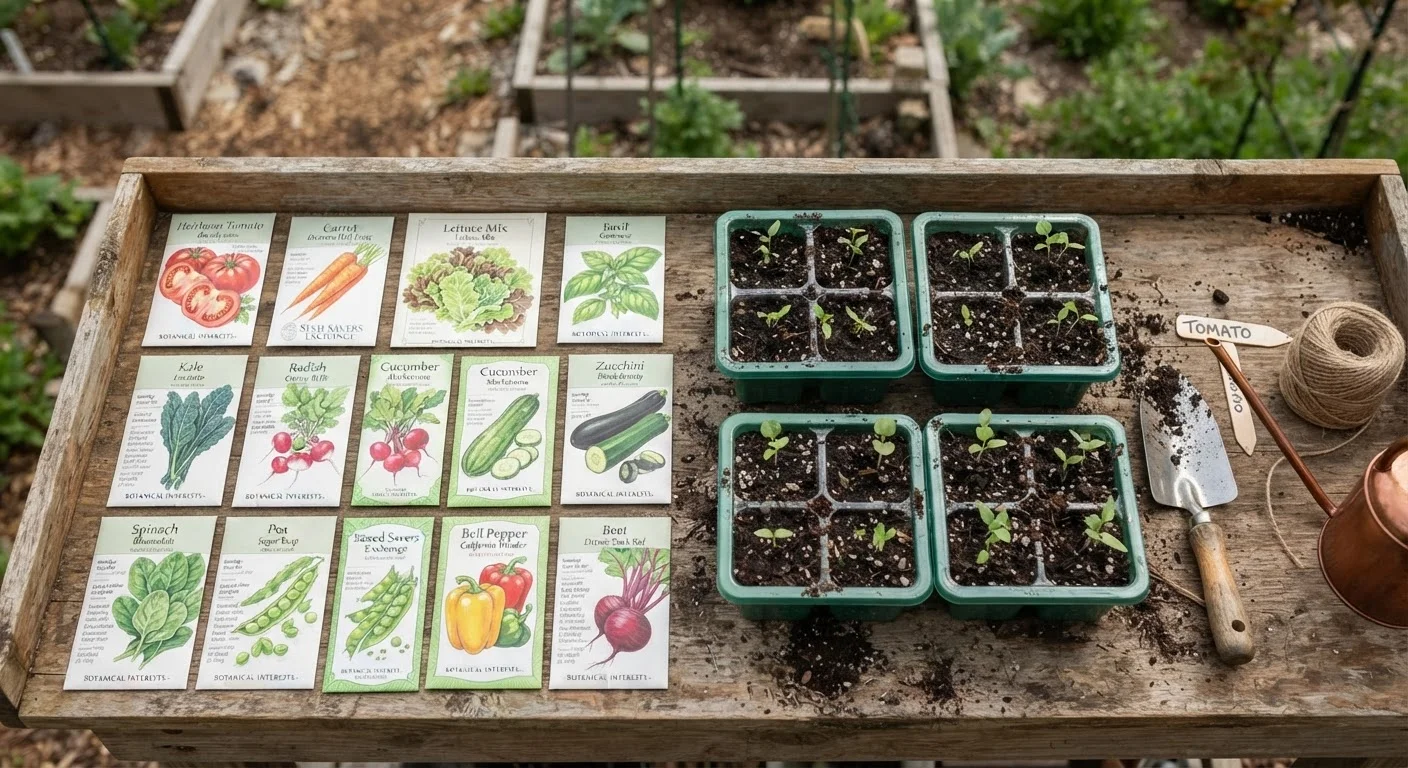
Option A
Seeds
The low-cost, high-volume starting point for patient gardeners.
Best for: Families growing large quantities of a crop, direct-sow vegetables, or anyone willing to manage germination at home.
Option B
Seedlings
The time-saving option when the growing season is short or schedules are tight.
Best for: Gardeners in short-season climates, beginners who want faster results, or anyone growing just a few plants of each variety.
The real cost breakdown
A packet of tomato seeds typically costs $2 to $4 at a garden center or hardware store and contains 25 to 50 seeds. A single tomato seedling in a 4-inch pot generally runs $3 to $6. If you need 20 tomato plants, seeds win on price without much contest. If you need two plants, the math flips quickly once you factor in seed-starting supplies.
Seed-starting mix, trays, and some form of supplemental light add real costs for indoor germination. A basic setup runs $20 to $40 the first season. That investment spreads across future seasons if you reuse the equipment, but it is a real upfront cost beginners often overlook. The hidden costs of a first vegetable garden include exactly these kinds of supply purchases that are easy to miss until you are standing in the store.
| Criterion | Seeds | Seedlings |
|---|---|---|
| Typical cost per plant | $0.05 to $0.20 | $3 to $6 |
| Upfront supply cost | $20 to $40 (first season) | None needed |
| Time to harvest | Longer (full season from germination) | Shorter (head start built in) |
| Best for direct-sow crops | Yes (carrots, beans, beets) | Not suitable |
| Seed saving possible | Yes (open-pollinated varieties) | Rarely (mostly hybrids) |
| Works for short growing seasons | Only with indoor setup | Yes |
| Variety selection | Very wide | Limited to what stores stock |
For families growing a wide range of crops, the practical approach is to buy seeds for high-volume, direct-sow vegetables and buy seedlings only for the handful of slow-maturing plants they want a few of. That way you avoid paying seedling prices for crops you will grow in rows, and you avoid the indoor-starting hassle for crops where you only want two or three plants.
Which crops work best from seed
Some vegetables are almost always better started from seed because they grow fast, produce well in large numbers, or do not transplant successfully. Beans, peas, carrots, beets, radishes, cucumbers, and squash fall into this group. Direct sowing these in the garden is cheaper, simpler, and often produces healthier plants than transplanting would.
Sunflowers and many herbs also germinate readily outdoors when soil temperatures are right. A single $2 seed packet of basil, for example, can produce more plants than most families need for a full season. Buying basil seedlings at $3 to $5 each is hard to justify when the seed packet delivers the same result with minimal effort.
For high-yield crops worth growing in a small backyard, seeds provide the biggest return per dollar spent, particularly for crops you will harvest repeatedly through the season.
When seedlings earn their price
Tomatoes, peppers, eggplant, and head-forming brassicas like broccoli and cauliflower need 6 to 10 weeks of indoor growing before they can go outside. In most of the US, that means starting them indoors in late winter under controlled conditions. Skipping that step by buying transplants is a reasonable trade-off when you lack grow lights or a warm indoor space.
Gardeners in northern states with short growing seasons often cannot get tomatoes or peppers to full maturity without transplants. The 4 to 6 weeks a seedling provides before outdoor planting can mean the difference between a full harvest and a frost-killed plant with green fruit.
If your garden is small and you want variety, buying a few seedlings of several different crops keeps cost manageable while letting you experiment without committing to a full flat of one variety. The spring planning checklist for families is a useful tool for deciding which crops to start early versus which to direct-sow once the ground is ready.
Saving seeds to cut future costs
One of the strongest financial arguments for seeds is the ability to save them. Open-pollinated and heirloom varieties produce seeds that grow true to the parent plant, so you can collect them at the end of the season and replant the following year at no cost. Hybrid varieties sold as transplants generally do not produce reliable seeds for replanting, which means buying new plants every season.
Seed saving works well for tomatoes, peppers, beans, peas, and many squash varieties. A family that saves seeds consistently can cover a large portion of their annual seed budget from what they grew the year before. For anyone interested in reducing garden costs over time, this is one of the most practical strategies available. The guide to starting a home garden on a tight budget covers this and other ways to bring first-year costs down without sacrificing variety or yield.
25-50x
Seed-to-seedling cost ratio per tomato plant
A $3 seed packet containing 30 seeds costs roughly $0.10 per plant, compared to $3 to $5 for a single garden-center tomato transplant.
6-10 weeks
Indoor lead time for tomatoes and peppers
USDA planting guidelines indicate that tomatoes and peppers need 6 to 10 weeks of indoor growth before transplanting outdoors after last frost.
$0
Annual seed cost when saving open-pollinated varieties
Gardeners who collect and dry seeds from open-pollinated crops at season end can replant those varieties the following year with no purchase required.
The content provided on our blog site traverses numerous categories, offering readers valuable and practical information. Readers can use the editorial team’s research and data to gain more insights into their topics of interest. However, they are requested not to treat the articles as conclusive. The website team cannot be held responsible for differences in data or inaccuracies found across other platforms. Please also note that the site might also miss out on various schemes and offers available that the readers may find more beneficial than the ones we cover.