

Our Verdict
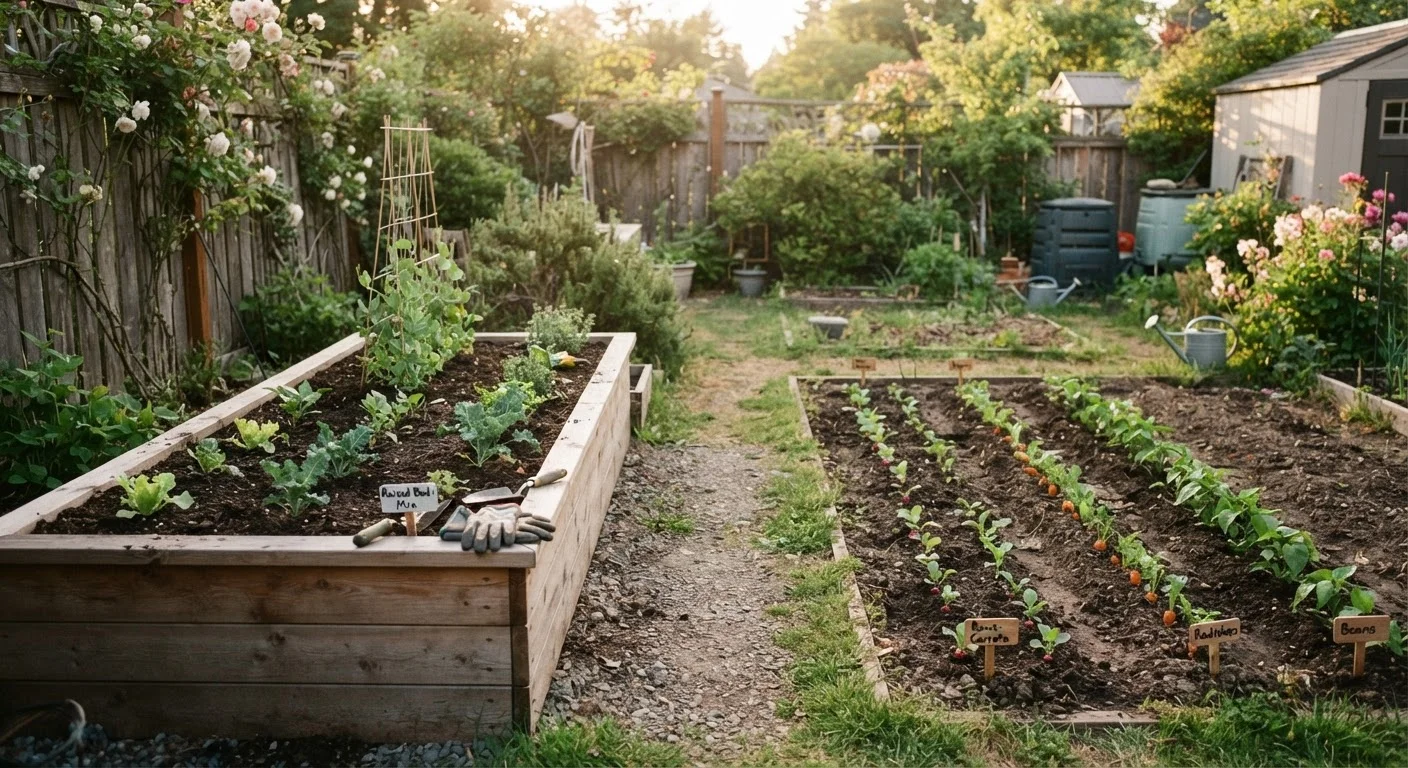
In-ground plots win on total cost over time, especially for families with decent existing soil and a willingness to put in some initial prep work. Raised beds make sense when the native soil is very poor, drainage is a problem, or physical accessibility matters, but that convenience comes at a real price that takes years to recover through harvest savings.
| Best for | Recommended |
|---|---|
| Families on a tight starting budget | In-ground plots |
| Gardeners with poor, compacted, or contaminated native soil | Raised beds |
| Those with limited mobility or back problems | Raised beds |
| Long-term growers focused on lowest cost per pound of food | In-ground plots |
What you actually spend to get started
A basic 4x8 raised bed built from cedar boards runs roughly $50 to $120 in lumber alone at typical home improvement store prices. Fill it with quality garden mix soil, and you will spend another $50 to $150 depending on your region and how many bags you need. Add hardware cloth for the bottom if you have gophers, a bag of compost, and maybe a simple irrigation line, and a single raised bed can easily reach $200 to $300 before you plant one seed.
An in-ground plot of the same square footage costs far less to begin. If your soil is workable, your main expenses are a soil test (often free through a county extension office or about $15 to $25 through a mail-in kit), compost or amendments to improve it, and basic tools you may already own. Realistically, starting a 32-square-foot in-ground plot with good soil prep can cost $20 to $60 in amendments the first year. That is a meaningful gap.
Poor soil changes the math. Clay-heavy or sandy soil may need several bags of compost, gypsum, or other amendments over two or three seasons before it performs well. Contaminated urban soil can make raised beds the only practical safe option for food growing. Knowing your soil before you commit to either approach is worth the small cost. See how to launch a garden on a tight budget for more on assessing your starting point.
Year-over-year costs
| Raised beds | In-ground plots | |
|---|---|---|
| Typical startup cost (32 sq ft) | $150 to $300+ | $20 to $60 |
| Annual soil maintenance cost | $20 to $40 per bed | $10 to $25 per plot |
| Soil drainage control | Excellent, by design | Depends on native soil |
| Spring warm-up speed | Faster | Slower |
| Weed pressure | Lower in early years | Higher without mulch |
| Long-term cost over 5+ years | Higher total spend | Lower total spend |
| Accessibility (physical ease) | Good with tall beds | Requires bending or kneeling |
| Best for poor or contaminated soil | Yes, avoids native soil | Requires remediation first |
Raised beds do not stay cheap after year one. Every spring you will likely top off the soil as it settles and breaks down, adding one or two bags of compost per bed at $8 to $15 each. Wooden beds made from untreated lumber may need repairs or replacement within five to eight years. Naturally rot-resistant woods like cedar last longer but cost more upfront.
In-ground plots need annual compost additions too, but the volume is smaller per square foot because you are building on existing soil rather than filling a frame from scratch. A well-maintained in-ground plot also tends to improve in fertility over time as organic matter builds up, which can reduce amendment costs in later years.
Watering costs tend to be slightly higher for raised beds because they drain faster and dry out more quickly, especially in hot climates. That faster drainage is a benefit in wet regions but a cost driver where summers are dry.
Yield and growing performance
Raised beds do offer some real growing advantages. The soil warms up faster in spring, which matters if you want to get cool-season crops like lettuce and spinach in early. Drainage is more predictable. Weed pressure is often lower in a freshly filled bed, at least in the first couple of years.
In-ground plots, once the soil is in good shape, can match or exceed raised bed yields for most vegetables. Root crops like carrots and parsnips often do better in deep, loose native soil than in the shallower fill of a standard raised bed. High-yield vegetables such as tomatoes, zucchini, and beans perform well in either system when soil fertility and watering are consistent.
The yield difference between the two methods, for most families, is not dramatic enough to justify the cost gap on its own. Soil quality and consistent watering matter more than the structure around the bed.
Where the money goes wrong
New gardeners often underestimate raised bed costs because the lumber price is visible but the soil cost is not obvious until they realize how many cubic feet an empty frame holds. A 4x8x12-inch bed needs about 32 cubic feet of soil mix, which translates to a lot of bags or a bulk delivery order. This is one of the most common places first-year budgets break down. First-year garden overspending follows a predictable pattern that both raised bed and in-ground gardeners fall into.
In-ground gardeners sometimes under-invest in soil prep, skip the amendment step to save money, and then get poor harvests that feel like a gardening failure. The $20 bag of compost you skip in spring can cost you a whole season of productivity.
For either system, starting from seed instead of buying transplants is one of the most reliable ways to cut per-plant costs significantly. Seeds versus seedlings is worth thinking through before your first trip to the garden center.
Cut raised bed soil costs with bulk orders
If you are building two or more raised beds at once, buying soil mix in bulk by the cubic yard from a local landscape supply yard typically costs 30 to 50 percent less than purchasing individual bags from a retail store. Call ahead to confirm delivery minimums and fees. Splitting a bulk order with a neighbor can bring costs down further.
The content provided on our blog site traverses numerous categories, offering readers valuable and practical information. Readers can use the editorial team’s research and data to gain more insights into their topics of interest. However, they are requested not to treat the articles as conclusive. The website team cannot be held responsible for differences in data or inaccuracies found across other platforms. Please also note that the site might also miss out on various schemes and offers available that the readers may find more beneficial than the ones we cover.