

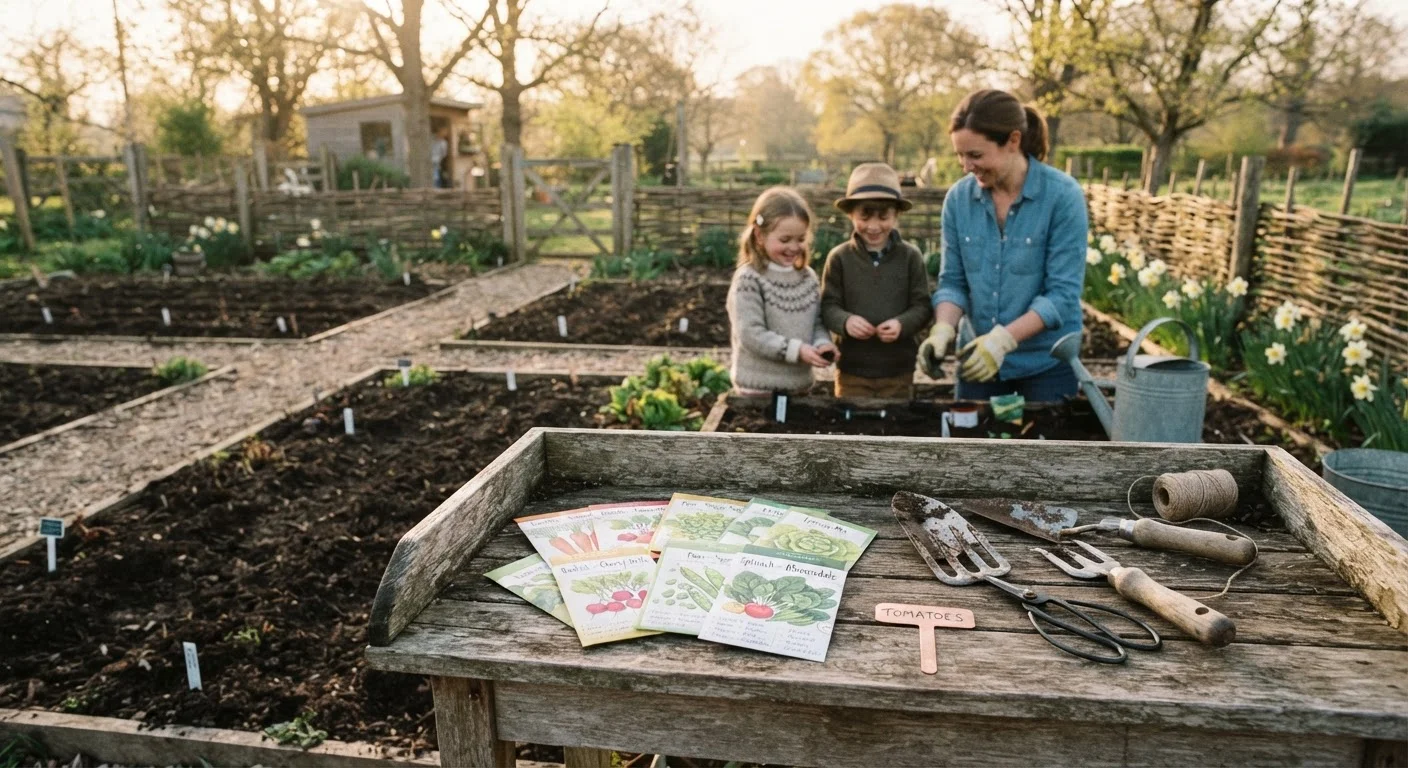
Summary
22 items · 30 to 60 minutes
Why a checklist makes spring prep easier
Spring gardening prep has a way of slipping through the cracks. One weekend the ground is still frozen, and the next it is time to plant and nothing is ready. Families who work through a structured checklist before the season begins spend less money, waste fewer seeds, and make fewer emergency trips to the garden center.
This checklist covers five areas: soil and bed condition, tools and supplies, seeds and seedlings, layout and spacing, and water and pest management. Work through each group in order. Some items take five minutes; a few require a day or two, so starting in late winter gives you breathing room.
If this is your first garden or you are working with a tight budget, the principles behind starting a home garden affordably give useful framing before you dive into the checklist items here.
Soil and bed condition
Tools and equipment
Seeds and seedlings
Layout and spacing
Water and pest prevention
Tools and supplies you will need
Most of these tools are basic and multi-season. Borrow or share with a neighbor before buying anything new, and check thrift stores and end-of-season clearance racks before paying full price. A soil test kit is the one item worth buying new if you have not tested in the last two to three years.
Soil test kit
Tests pH and primary nutrient levels so you add only the amendments your soil actually needs.
Garden fork or spade
Breaks up and turns compacted soil before planting season begins.
Hand pruners
Cuts back dead stems and overgrowth from last season's beds.
Hose with adjustable nozzle or soaker hose
Delivers water to root zones consistently without overwatering foliage.
Seed-starting trays and potting mix
Gives crops like tomatoes and peppers the indoor head start they need before last frost.
Garden notebook or printed layout grid
Records bed measurements, plant placement, and crop rotation notes for the season.
Row cover or mesh netting
Protects seedlings from late frost and early-season pest pressure.
Seed and seedling decisions
Once your beds and tools are accounted for, your seed inventory drives the rest of your planning. Count what you have, check germination dates on packets, and compare what you want to grow against what your space and frost window actually allow.
Starting from seed costs less upfront for most vegetables, but some crops, tomatoes and peppers especially, need a long indoor head start. If you missed the indoor start window, a seedling may save the season without costing much more overall. The trade-offs are explained in detail in our seeds versus seedlings guide for budget gardeners.
Old seeds may not germinate reliably
Seed viability drops each year after the pack date, and some crops such as parsnips and onions lose germination rates quickly. Before you base your whole layout on seeds you found at the back of a drawer, do a simple germination test: place 10 seeds between damp paper towels, seal in a bag, and check after the days listed on the packet. If fewer than 6 of 10 sprout, buy fresh seed rather than planting a full bed and getting a poor stand.
Putting the checklist to use
Print the checklist or keep it open on your phone while you walk your garden beds. Mark items complete as you go rather than trying to hold everything in your head. Any item you cannot complete right away becomes a task with a date attached, not a vague intention.
The same habit of structured preparation that works in the garden also applies in other areas of family spending. The pre-grocery-run checklist uses the same logic to cut food spending each week, and the Smart Home Savings hub has more ideas for reducing household costs across seasons.
Work through the soil and bed group first. Everything else depends on knowing what condition your growing space is actually in before you commit to a layout or spend money on seeds.
The content provided on our blog site traverses numerous categories, offering readers valuable and practical information. Readers can use the editorial team’s research and data to gain more insights into their topics of interest. However, they are requested not to treat the articles as conclusive. The website team cannot be held responsible for differences in data or inaccuracies found across other platforms. Please also note that the site might also miss out on various schemes and offers available that the readers may find more beneficial than the ones we cover.