

Why planning from the fridge out saves more than planning from a recipe in
Most families build their grocery list by picking recipes first, then buying everything those recipes require. The fridge gets ignored until something fuzzy turns up in the back. That habit is one of the quietest drivers of an inflated weekly bill. The USDA has estimated that American households throw away a substantial share of the food they buy, and much of that loss happens at home, not at the store.
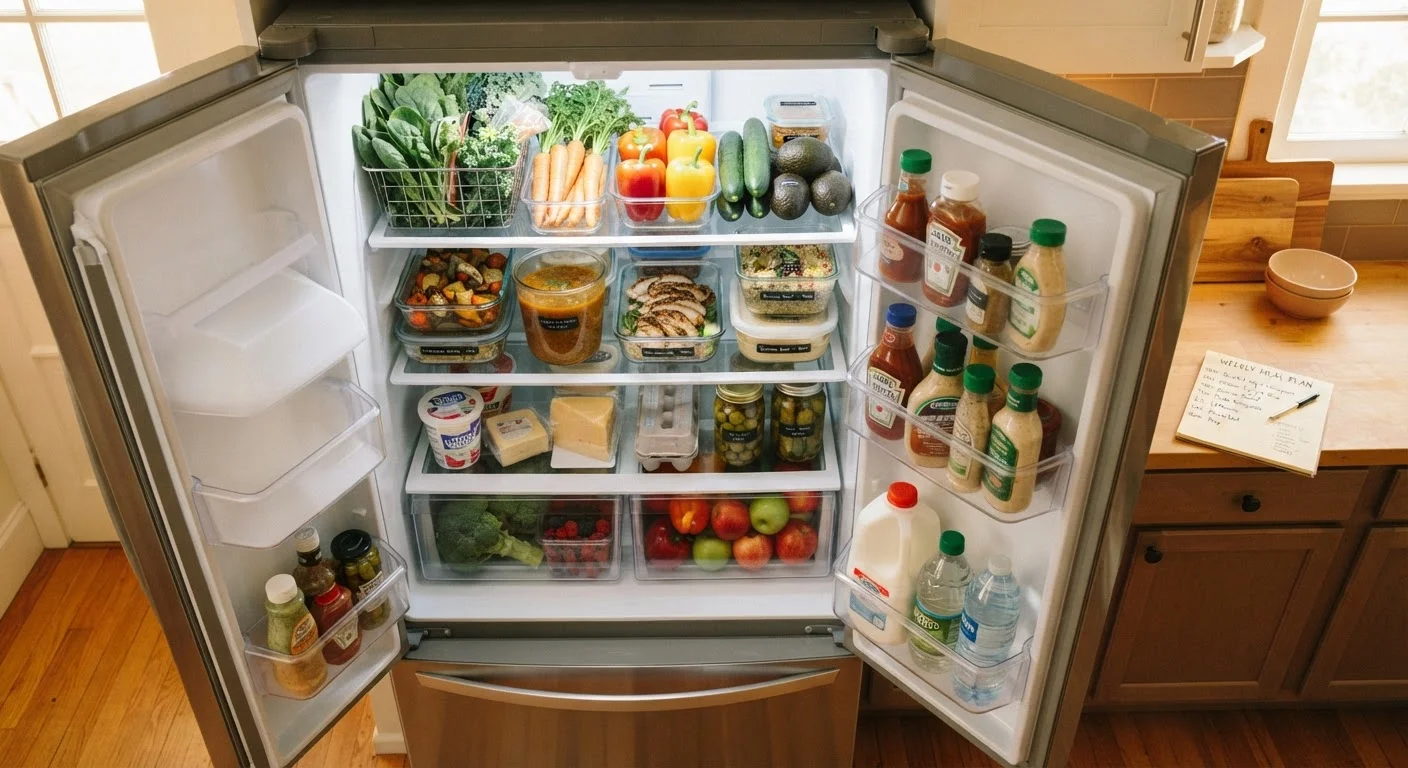
A fridge-first approach flips the sequence. Before any recipe gets chosen, you take stock of what is already on hand: leftover proteins, vegetables approaching their peak, half-used cans, and pantry staples. Meals get built around those items rather than around a fresh shopping cart. The grocery run fills only the genuine gaps. If you want to understand how common planning gaps quietly inflate costs, this breakdown of grocery bill habits covers the patterns in detail.
The weekly reset process, step by step
Once a week, before writing a single item on your grocery list, do a structured check of what you have. Open the fridge, note what is close to its use-by date, and pull those items to the front. Check the freezer for proteins that have been sitting there. Scan the pantry for canned goods, grains, and sauces that are already paid for. Write down what you find.
Then assign the most perishable items to the first two or three nights of the week. A bunch of wilting spinach becomes Monday's frittata or a pasta topping. A cooked chicken breast from the weekend becomes Tuesday's grain bowl. Sturdier vegetables, root vegetables, and frozen proteins get scheduled later. This sequencing alone can prevent the end-of-week scramble where you throw out the things you never got to. Our pre-shop checklist walks through this audit in a format you can run through quickly.
Building a flexible weekly framework instead of a rigid daily menu
Rigid day-by-day menus fail because life does not cooperate with them. A flexible framework assigns meal types to days without locking in a specific recipe. Monday might always be a grain bowl using whatever cooked grain and vegetables are on hand. Wednesday might be a soup or stew, a natural home for odds and ends from the produce drawer. Friday becomes a "use it up" night where leftovers get combined into something simple.
This structure lets you stay responsive without starting from scratch each week. When you batch-cook one or two base ingredients on the weekend, such as a pot of rice or a tray of roasted vegetables, those components feed into multiple meals without requiring repeated cooking sessions. For a deeper look at which prep tasks actually pay off, see what Sunday meal prep actually saves. Anchoring your cooking to reliable pantry staples means you always have something to build around even when the fridge is nearly empty.
Handling scraps, extras, and the food that almost got wasted
Even with a solid framework, some food gets close to the edge. Vegetable scraps, herb stems, and bones do not have to go in the trash. Collecting them in a freezer bag throughout the week means you can turn them into a basic stock when the bag is full. That stock costs nothing beyond the effort of simmering it. If you want to take this further, composting kitchen scraps gives any plant-based waste a second purpose.
Proteins are worth treating with the same care. A whole chicken, cooked once, can stretch across several different meals when you have a plan for it. Stretching a whole chicken into five meals walks through how that works in practice. These habits compound: less waste means the grocery budget goes further without requiring any additional spending, and the next weekly reset starts with more usable food already on hand. For anyone new to this approach, a starting point for budget cooking covers the foundational habits that make the whole system easier.
The content provided on our blog site traverses numerous categories, offering readers valuable and practical information. Readers can use the editorial team’s research and data to gain more insights into their topics of interest. However, they are requested not to treat the articles as conclusive. The website team cannot be held responsible for differences in data or inaccuracies found across other platforms. Please also note that the site might also miss out on various schemes and offers available that the readers may find more beneficial than the ones we cover.