

Why pantry staples matter for family food budgets
Most grocery spending pressure comes from buying ingredients for one meal at a time. When a pantry holds a core set of long-lasting, versatile items, it becomes possible to cook many meals without a daily trip to the store. These staples stretch across breakfasts, lunches, dinners, and snacks, and they tend to cost far less per serving than packaged or convenience foods.
This reference covers the staple categories that consistently appear across budget meal plans. If you are new to planning meals around what you already own, the weekly grocery reset guide walks through a practical framework for doing exactly that. For families just starting out with budget cooking more broadly, see eating well on a tight budget.
| Shelf life of dried lentils | 2 to 3 years (airtight storage) (USDA Food Safety and Inspection Service) |
| Shelf life of white rice | Up to 5 years (sealed container) (USDA Food Safety and Inspection Service) |
| Dried lentil serving yield | Approximately 6 servings per pound |
| Canned goods typical shelf life | 2 to 5 years from production date (USDA guidelines) |
| Core spices for a starter pantry | 9 spices cover most recipe needs |
| All-purpose flour uses | Bread, pancakes, soups, baked goods, coatings |
Grains, legumes, and dried goods
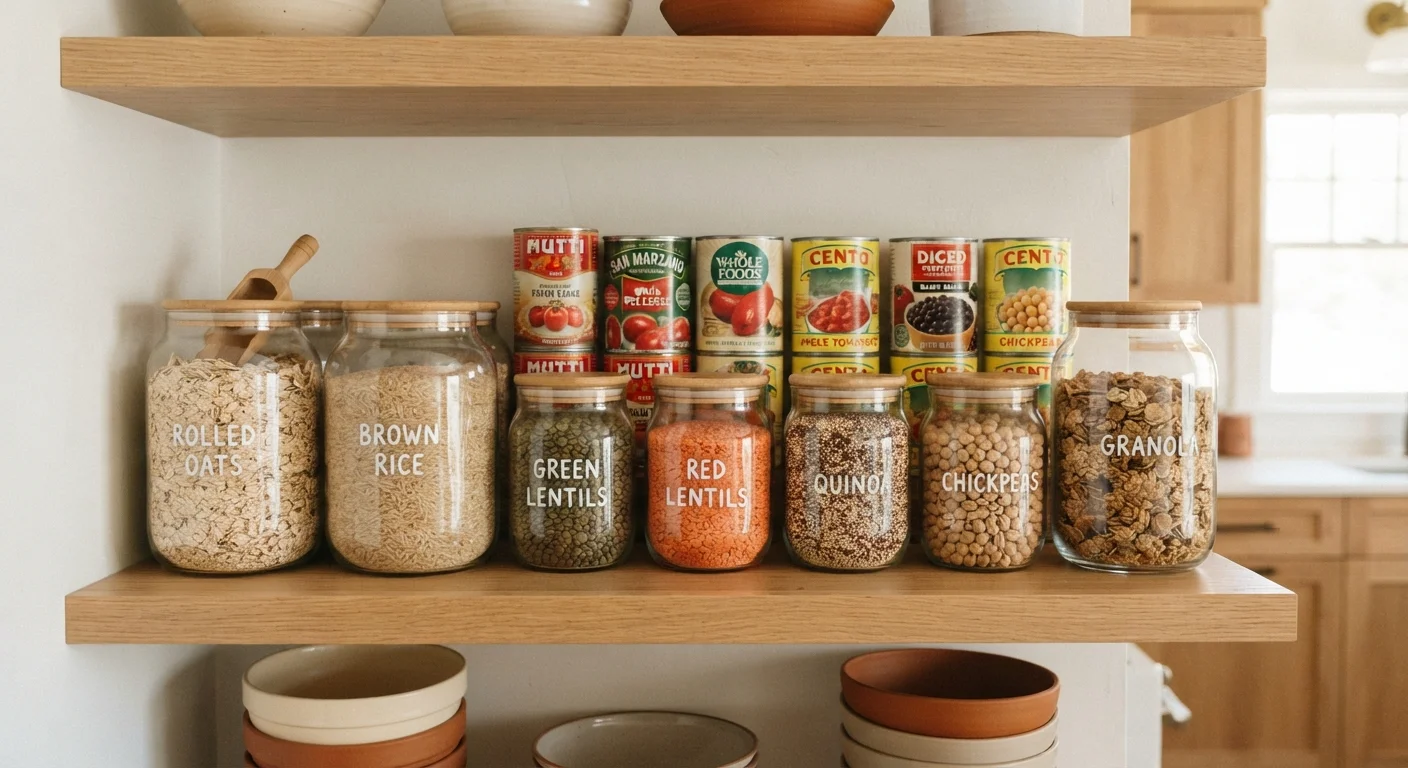
White rice, brown rice, oats, and dried pasta form the calorie base of countless meals. White rice stores for years and cooks in under 20 minutes. Oats work for breakfast porridge, baked goods, and even savory dishes. Dried pasta is one of the lowest cost-per-serving foods available in any grocery store.
Dried legumes, including lentils, split peas, black beans, pinto beans, and chickpeas, supply protein and fiber at a fraction of the cost of meat. Red lentils require no soaking and cook in about 20 minutes, making them practical on busy weeknights. A pound of dried lentils typically yields six or more servings. Canned legumes cost more per serving than dried but still offer strong value and cut preparation time significantly.
Flour and cornmeal round out this category. All-purpose flour makes bread, pancakes, thickened soups, and coatings for pan-fried proteins. Cornmeal adds variety through cornbread, polenta, and porridge.
Storage tip: dried grains and legumes stay fresh longest in airtight containers away from heat and light. Most will hold their quality for one to two years this way.
Canned and jarred goods
Canned tomatoes (whole, diced, and crushed) are among the most useful single items in any budget pantry. They form the base of soups, stews, pasta sauces, chilis, and braised dishes. A standard 28-ounce can of crushed tomatoes can stretch across two or three meals.
Canned fish, particularly tuna and salmon, provides ready protein. Canned chicken and sardines also fit this category. These items require no refrigeration before opening and have shelf lives measured in years, not days.
Canned or jarred vegetables such as corn, peas, and green beans are not nutritional replacements for fresh produce in every situation, but they are practical when fresh options are expensive or unavailable. The USDA notes that canned vegetables retain most of their nutrients and can be part of a balanced diet.
Chicken, beef, and vegetable broths in cartons or cans add depth to rice dishes, soups, and gravies. Low-sodium versions give more control over seasoning.
Fats, oils, and condiments
A neutral cooking oil, such as vegetable or canola oil, and a bottle of olive oil together cover almost every cooking method. Vegetable oil handles high-heat frying and baking. Olive oil works well for lower-heat sautes and dressings.
Butter adds flavor to baked goods, sauces, and cooked vegetables. Buying larger blocks generally costs less per ounce than small sticks.
Vinegar (white, apple cider, and red wine) is inexpensive and lasts indefinitely. It brightens cooked beans, balances soups, and makes simple salad dressings. Soy sauce, hot sauce, and Worcestershire sauce each add salt and depth to proteins, grains, and stir-fries without requiring elaborate cooking.
Honey and sugar belong in this group too. Both sweeten beverages, baked goods, and glazes, and both store without expiring under normal conditions.
Managing food costs is one part of a larger picture. The guide to managing home expenses strategically covers how food spending fits alongside other household budget categories.
Spices and aromatics
A small but deliberate spice collection is what separates a pantry that produces one flavor from one that produces dozens. The following are genuinely multi-use: kosher salt, black pepper, garlic powder, onion powder, cumin, paprika (smoked or sweet), chili powder, dried oregano, and cinnamon. Each one appears in recipes across many different cuisines and meal types.
Fresh garlic and onions are not shelf-stable forever, but they last several weeks stored properly and are among the lowest-cost aromatics per use. They form the flavor base of soups, stews, beans, and meat dishes across virtually every cooking tradition.
Buying spices from bulk bins (where available) or in larger quantities generally costs less than buying small individual jars repeatedly. Whole spices last longer than ground ones, though ground spices are more convenient for everyday use.
Food spending, like other household costs, responds well to a consistent system rather than a single large change. A stocked pantry built over several shopping trips costs less in total than one bought all at once.
The content provided on our blog site traverses numerous categories, offering readers valuable and practical information. Readers can use the editorial team’s research and data to gain more insights into their topics of interest. However, they are requested not to treat the articles as conclusive. The website team cannot be held responsible for differences in data or inaccuracies found across other platforms. Please also note that the site might also miss out on various schemes and offers available that the readers may find more beneficial than the ones we cover.