

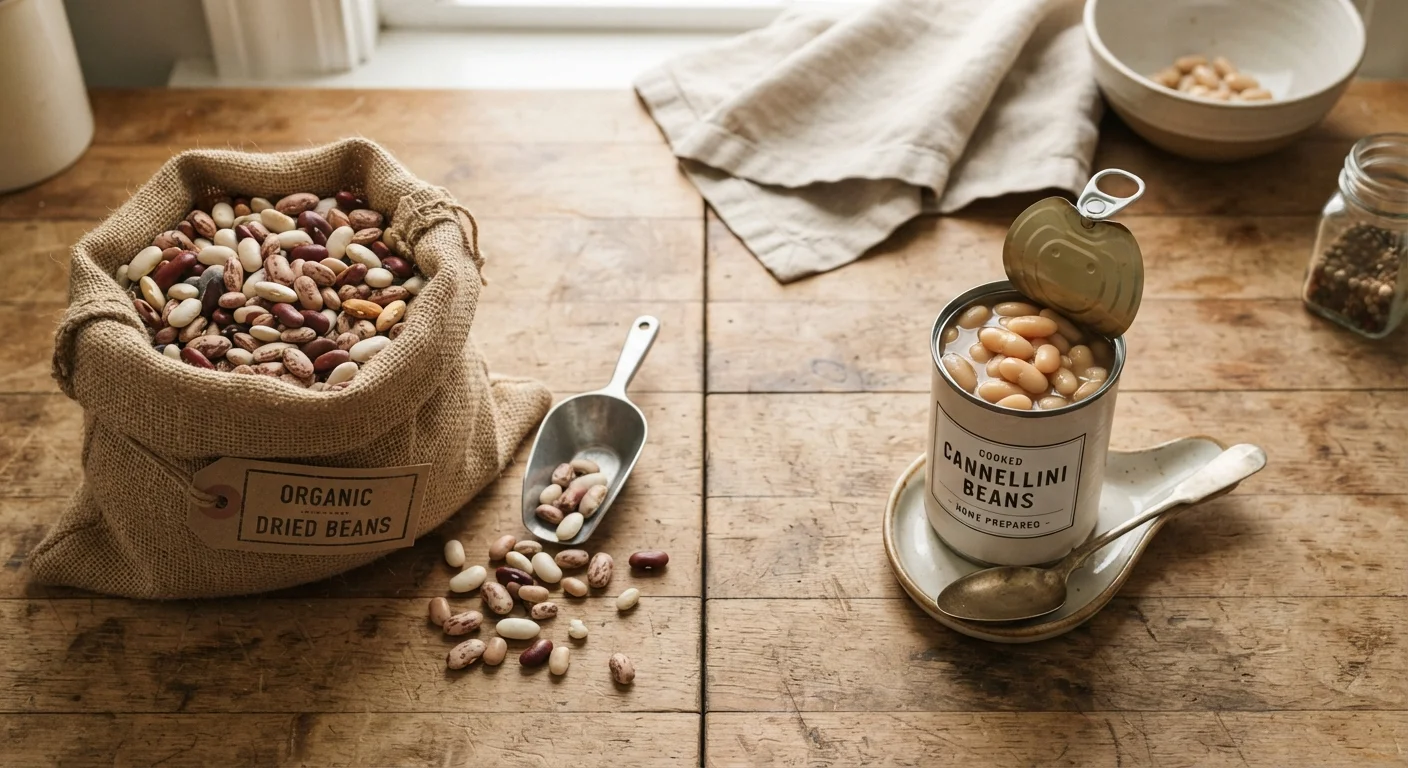
Option A
Dried beans
The thrifty, long-shelf-life staple for planned cooking.
Best for: Families who meal-prep ahead and want the lowest possible cost per serving.
Option B
Canned beans
The ready-when-you-need-it option for busy weeknights.
Best for: Households that need a fast, no-planning protein source on short notice.
The cost difference is real, but so is the time cost
A one-pound bag of dried black beans typically yields around 6 cups of cooked beans. A standard 15-ounce can of black beans holds about 1.5 cups drained. That means one dried-bean bag equals roughly four cans. At average U.S. grocery prices, a pound of dried beans often costs less than a single can of its canned equivalent, making the per-serving price of dried beans anywhere from three to five times lower depending on the store and variety.
That gap matters if beans are a weekly staple for your family. Over a year of regular use, the savings can add up to a meaningful amount. However, the time investment is real. Dried beans typically need an overnight soak or a quick-boil soak, then 45 to 90 minutes of simmering. If that planning step fails, dinner plans fall apart.
The money-versus-time trade-off is worth thinking through honestly. A family that consistently cooks dried beans saves money. A family that soaks beans and then never cooks them because the day got busy wastes both the time and the food.
| Criterion | Dried beans | Canned beans |
|---|---|---|
| Cost per serving | Roughly $0.10 to $0.20 | Roughly $0.40 to $0.70 |
| Preparation time | 8 to 12 hours soak + 1 to 1.5 hr cook | Under 5 minutes |
| Sodium content | None (no added salt) | 300 to 500 mg per 1/2 cup (varies) |
| Shelf life | Up to 2+ years sealed | 2 to 5 years per label |
| Nutritional quality | High protein, fiber, minerals | Comparable after rinsing |
| Texture control | Fully adjustable | Pre-set by canning process |
| Best use case | Meal prep, soups, stews | Quick weeknight meals |
Nutrition: closer than most people think
Dried beans and canned beans start from the same ingredient. The canning process does reduce some heat-sensitive B vitamins, particularly folate, by a modest amount, but the protein, fiber, and mineral content (iron, magnesium, potassium) remains largely intact. For practical meal planning, both forms deliver comparable nutrition.
Sodium is the meaningful difference. Unsalted dried beans contain no sodium. A standard can of beans can contain 300 to 500 milligrams of sodium per half-cup serving. Choosing low-sodium or no-salt-added canned varieties narrows that gap, and rinsing any canned beans under cold water for 30 seconds removes a significant portion of added sodium, according to USDA food composition data.
For families with members managing blood pressure or other conditions where sodium matters, this distinction is worth paying attention to. That said, canned beans remain a nutritious, affordable protein source even without adjustments. This article provides general food information, not medical advice; consult a healthcare provider for guidance specific to your family's health needs.
Practical storage and shelf life
Dried beans stored in a sealed container in a cool, dry pantry can last two years or longer without spoiling, though older beans take longer to cook and may never fully soften beyond a certain age. Canned beans carry a printed best-by date that typically runs two to five years from production and hold up well in any pantry-temperature environment.
Both forms fit the framework of a budget pantry foundation because they sit on a shelf indefinitely and step in whenever fresh protein is unavailable or too expensive. The practical difference is flexibility: canned beans require no preparation window, while dried beans require you to remember to start them in time.
Families who use batch cooking on weekends get the most value from dried beans. Cook a large pot on Sunday, portion it into containers, and the cooked beans are as quick to use as canned for the rest of the week. That approach captures most of the cost savings with far less weeknight friction.
When to use each form
Dried beans make sense when you have time to plan: soups, stews, and chili that simmer for an hour anyway, weekend meal prep, or any recipe where you control the salt level and texture matters. Heirloom or specialty varieties (certain pinto or borlotti types) also tend to be available only dried, so the choice is sometimes made for you.
Canned beans fit fast weeknight meals: adding chickpeas to a grain bowl, stirring white beans into pasta, mashing black beans for tacos. They also work as backup stock when a planned dried-bean batch did not happen. Keeping a mix of both in the pantry gives a family the most flexibility without committing fully to either.
The reusable versus disposable trade-off analogy holds here: neither form is universally superior. The right answer depends on your household's actual schedule, storage, and cooking habits, not on an abstract ideal of frugality.
The content provided on our blog site traverses numerous categories, offering readers valuable and practical information. Readers can use the editorial team’s research and data to gain more insights into their topics of interest. However, they are requested not to treat the articles as conclusive. The website team cannot be held responsible for differences in data or inaccuracies found across other platforms. Please also note that the site might also miss out on various schemes and offers available that the readers may find more beneficial than the ones we cover.