

Our Verdict
Batch cooking is a genuine time and money tool for families who can commit to a regular prep session and have adequate storage. It works less well when schedules are unpredictable, kitchen space is limited, or household members resist eating the same food repeatedly. The method does not need to be all-or-nothing: cooking large batches of a few base ingredients, such as grains or proteins, can deliver most of the savings without requiring a full weekly overhaul.
Families with a consistent weekly schedule, a reasonably sized freezer, and at least one adult willing to spend a few hours cooking on a set day.
What batch cooking actually involves
Batch cooking means preparing large quantities of food in one session, then storing portions for use across multiple meals over the following days or week. It is different from simple meal prep, which often means chopping vegetables or marinating proteins without fully cooking them. In batch cooking, you typically produce finished or near-finished food: cooked grains, braised meats, soups, or roasted vegetables that can be combined in different ways at mealtime.
For families new to the practice, a solid grounding in budget meal planning helps set realistic expectations before committing to a full batch-cooking routine. The two approaches complement each other: a weekly meal plan tells you what to cook, and batch cooking tells you when and how much.
A typical session might run two to four hours depending on the menu, the number of dishes, and how experienced the cook is. That time investment is the starting point for evaluating whether the method fits a given household.
Where batch cooking delivers real value
Lower cost per serving through bulk purchasing
Buying staples like grains, legumes, and proteins in larger quantities typically costs less per unit. Those savings compound across a month of regular batch cooking.
Fewer weeknight decisions about what to cook
Having prepped food in the refrigerator removes the daily question of what to make for dinner, which often leads to expensive last-minute choices like takeout.
Less food waste from unused perishables
Cooking vegetables and proteins promptly after purchase reduces spoilage. Prepared food stored correctly in the freezer extends its usable life further.
More control over ingredients and portion sizes
Cooking from scratch in bulk makes it straightforward to control sodium, added sugars, and portion sizes in ways that packaged convenience foods do not allow.
The financial case is straightforward. Buying a five-pound bag of dried beans or a large cut of meat costs less per serving than buying smaller quantities several times a week. That per-unit saving compounds over a month. The comparison between dried and canned beans is a good example of how ingredient choice within a batch-cooking approach can add up to meaningful savings over time.
On busy weeknights, having food already cooked removes the decision pressure that often leads families to order takeout or rely on expensive convenience foods. That friction reduction is a real, practical benefit even if it is hard to put an exact dollar figure on it.
Where batch cooking creates friction
Large upfront time commitment each week
A full batch-cooking session commonly takes two to four hours. Any disruption to that scheduled block can leave the family without the planned food for the week.
Food repetition causes mealtime resistance
Eating the same dishes across four or five days wears on most household members, particularly children. Avoiding this requires more varied recipes and greater planning effort.
Requires adequate storage space
Large batches need containers, refrigerator capacity, and ideally freezer space. Families in smaller homes may find that storage logistics limit how much they can realistically batch.
Some foods degrade in texture or flavor after storage
Cooked pasta, crispy vegetables, and certain proteins do not reheat as well as soups or grains. Planning a menu around foods that store well takes practice.
Works poorly with unpredictable schedules
Travel, shift work, school activities, and changing family plans can make a weekly prep routine hard to sustain consistently over several months.
The upfront time cost is the most common reason families abandon batch cooking after a few weeks. A Sunday afternoon that gets interrupted by an errand, a sick child, or unexpected plans can derail the whole week's food plan if the household has no backup approach.
Food fatigue is another real issue. Eating the same soup or grain bowl four days in a row wears on most people, especially children. Building enough variety into a single batch session to prevent repetition takes planning skill that newer cooks often underestimate.
Storage is a practical constraint that is easy to overlook. A large batch of food needs containers, refrigerator space, and often a dedicated freezer. Families in smaller homes or apartments may find the logistics genuinely difficult. Weighing the time and money trade-offs in your own household context is worth doing before investing in a full set of containers and a new routine.
Comparing batch cooking to other prep strategies
Batch cooking is not the only way to reduce weeknight kitchen effort. Some families find that a lighter Sunday prep session, covering just a few tasks rather than full meals, fits their lives better. A practical look at which Sunday prep tasks actually cut weeknight effort can help families calibrate how much preparation is genuinely useful versus how much creates extra work for minimal gain.
For households tracking overall spending, batch cooking is one tool within a broader food budget. Building a monthly household budget that includes a realistic food category helps clarify how much batch cooking needs to save to be worth the time, and whether that threshold is achievable given your grocery costs.
Batch cooking and food safety
Cooked food stored in a refrigerator is generally safe for three to four days, according to USDA food safety guidelines. Food intended for longer storage should be frozen promptly, ideally within two hours of cooking. Label containers with dates so nothing gets kept past its safe window. This is general guidance; for specific food safety questions, the USDA FoodSafety.gov resource is a reliable starting point.
A practical way to start without overcommitting
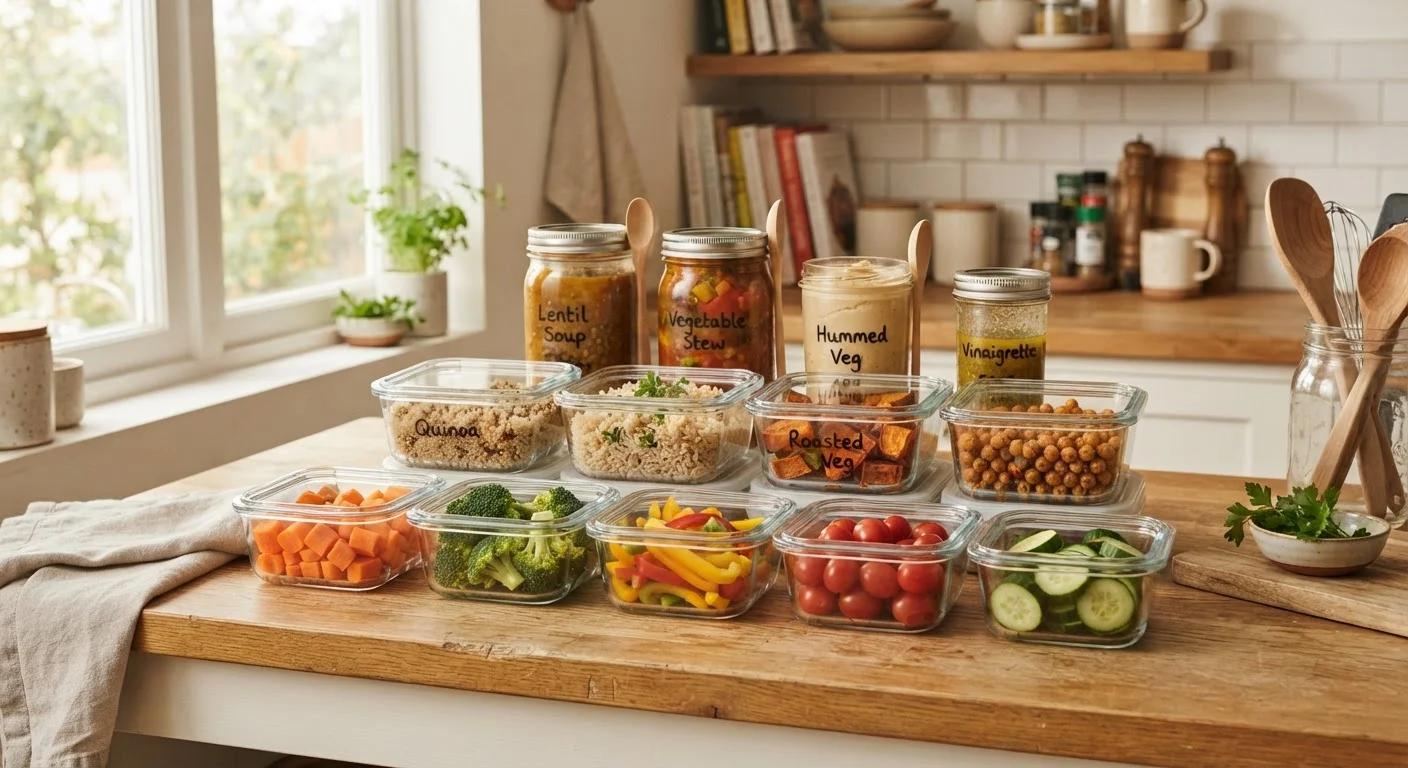
A reasonable entry point is cooking just two or three base ingredients in large quantities: a pot of grains, a tray of roasted vegetables, and a batch of beans or a braised protein. These components can be mixed across different meals without feeling repetitive, and the prep time stays manageable. This partial approach captures most of the cost savings without requiring a full weekly commitment.
Families who want a broader framework for managing household food costs alongside other expenses can find useful starting points in a guide to managing home expenses strategically. Treating food spending as one category within a complete household picture makes it easier to decide how much effort batch cooking is worth for your specific situation.
The content provided on our blog site traverses numerous categories, offering readers valuable and practical information. Readers can use the editorial team’s research and data to gain more insights into their topics of interest. However, they are requested not to treat the articles as conclusive. The website team cannot be held responsible for differences in data or inaccuracies found across other platforms. Please also note that the site might also miss out on various schemes and offers available that the readers may find more beneficial than the ones we cover.