

Why bills stay high even without obvious waste
Most utility overspending comes from small, persistent inefficiencies rather than one dramatic cause. A dripping faucet wastes thousands of gallons per year. A water heater set 20 degrees too high adds cost every single day. Gaps around door frames let conditioned air escape around the clock. None of these require a contractor to fix, and collectively they can account for a substantial share of monthly costs.
Where household budgets actually leak is worth reading alongside this guide, because utility waste fits a larger pattern of recurring costs that go unexamined simply because they arrive as predictable bills.
The steps below are organized by effort and upfront cost, starting with zero-cost habit changes and moving toward minor purchases that pay for themselves quickly.
What you will need
Step-by-step: changes that lower electricity, gas, and water costs
Work through these steps in order or pick the ones that apply most directly to your home. Each stands on its own.
Adjust your water heater temperature
Most water heaters ship from the factory set to 140 degrees Fahrenheit. The U.S. Department of Energy recommends 120 degrees for most households, which is sufficient for sanitation and reduces standby heat loss. Locate the thermostat dial on your water heater tank and turn it down to 120. Allow 24 hours for the tank temperature to stabilize before testing at a tap.
Seal air leaks around doors and windows
Hold a lit stick of incense or a thin piece of tissue near door frames, window edges, and electrical outlets on exterior walls. Movement in the smoke or tissue indicates air infiltration. Apply self-adhesive foam weatherstripping to door frames and V-strip (tension seal) weatherstripping to window sashes where gaps appear. For electrical outlets on exterior walls, install foam gaskets behind the outlet covers.
Door sweeps on the base of exterior doors address the gap at floor level, which is often one of the largest single sources of air leakage in older homes.
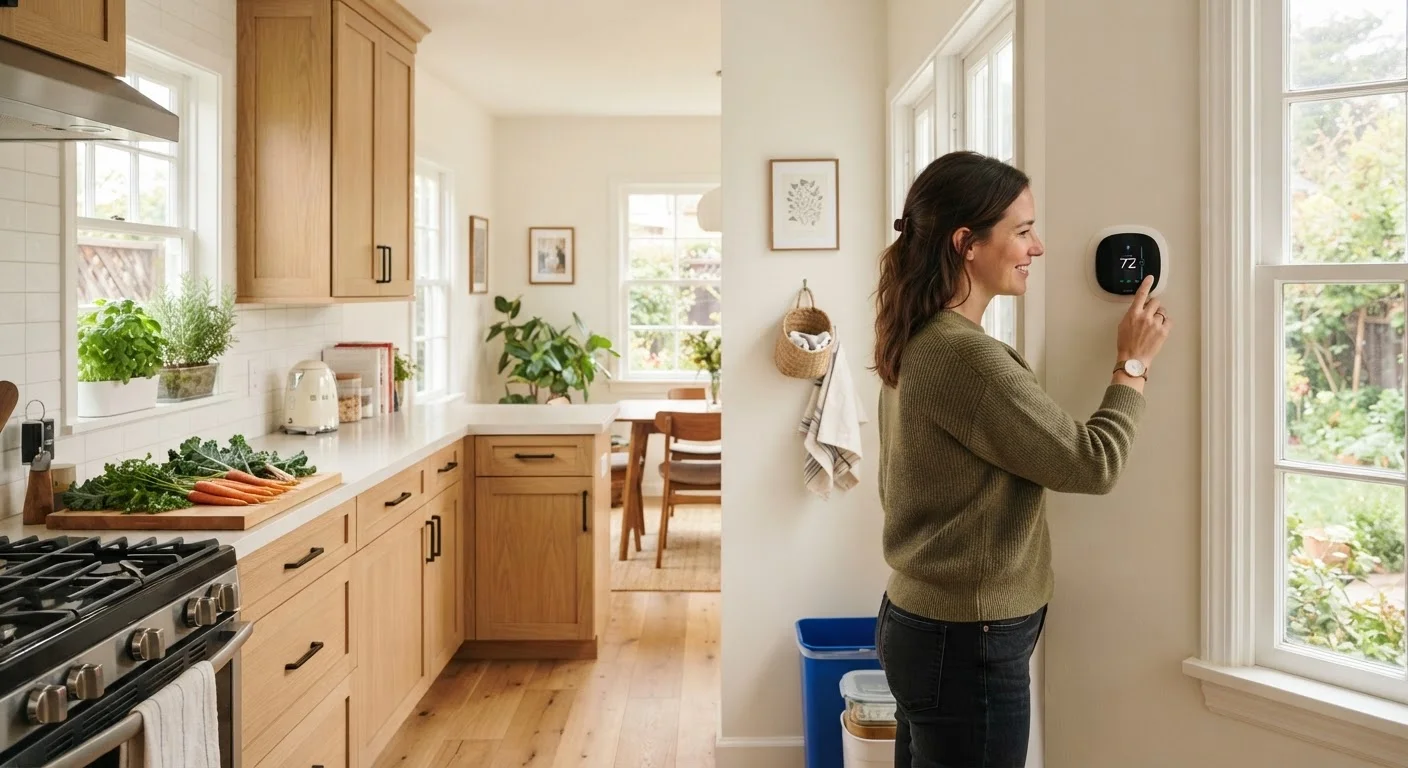
Set a thermostat schedule and stick to it
Heating and cooling account for the largest portion of most home energy bills. Setting your thermostat 7 to 10 degrees lower (in winter) or higher (in summer) for the 8 or more hours a day when the house is empty or everyone is asleep can reduce annual heating and cooling costs by around 10 percent, according to the U.S. Department of Energy. Program this into your existing thermostat using its built-in schedule function, or set a phone reminder to adjust it manually if your thermostat lacks programming.
Shift large appliance use to off-peak hours
If your utility offers time-of-use pricing, running the dishwasher, washing machine, and clothes dryer after 9 p.m. or before 7 a.m. can meaningfully reduce the per-kilowatt-hour rate you pay. Check your utility bill or provider's website to see whether time-of-use rates apply to your account. Even without time-of-use pricing, running these appliances with full loads rather than partial ones improves energy and water efficiency per unit of laundry or dishes cleaned.
Fix dripping faucets and running toilets
A faucet dripping at one drop per second wastes roughly 3,000 gallons per year, according to the U.S. Environmental Protection Agency. A running toilet can waste 200 gallons or more per day. Replace worn faucet washers or cartridges using the repair kit designed for your faucet type (check the brand and model stamped on the faucet body). For a running toilet, the most common cause is a worn flapper valve, which costs about $5 to $10 and takes under 15 minutes to replace without special tools.
Eliminate phantom (standby) power loads
Electronics and appliances draw power even when switched off or in standby mode. Televisions, game consoles, cable boxes, and older phone chargers are common contributors. Plug home entertainment equipment into a power strip with an on/off switch and turn the strip off when the equipment is not in use. For devices that genuinely need to stay in standby (such as a cable DVR scheduled to record), leave those plugged in directly. The goal is to cut phantom load from devices that offer no benefit while drawing power in standby.
Keeping gains over time
One-time fixes help, but the real savings come from repeating a few checks regularly. Once a year, inspect weatherstripping for wear, check that HVAC filters are replaced on schedule (typically every 1 to 3 months depending on filter type and household), and review your utility bills against the same month the prior year. A sudden spike usually signals a new leak, a failing appliance seal, or a change in household behavior worth examining.
Auditing your home bills once a year is a practical way to catch drift before it compounds. For households considering temperature control upgrades, comparing programmable and smart thermostats can clarify which option fits your usage patterns and budget.
Small maintenance tasks also connect to larger repair costs down the line. The real cost of ignoring small home maintenance tasks covers how deferred upkeep turns into expensive fixes.
The content provided on our blog site traverses numerous categories, offering readers valuable and practical information. Readers can use the editorial team’s research and data to gain more insights into their topics of interest. However, they are requested not to treat the articles as conclusive. The website team cannot be held responsible for differences in data or inaccuracies found across other platforms. Please also note that the site might also miss out on various schemes and offers available that the readers may find more beneficial than the ones we cover.