

Our Verdict
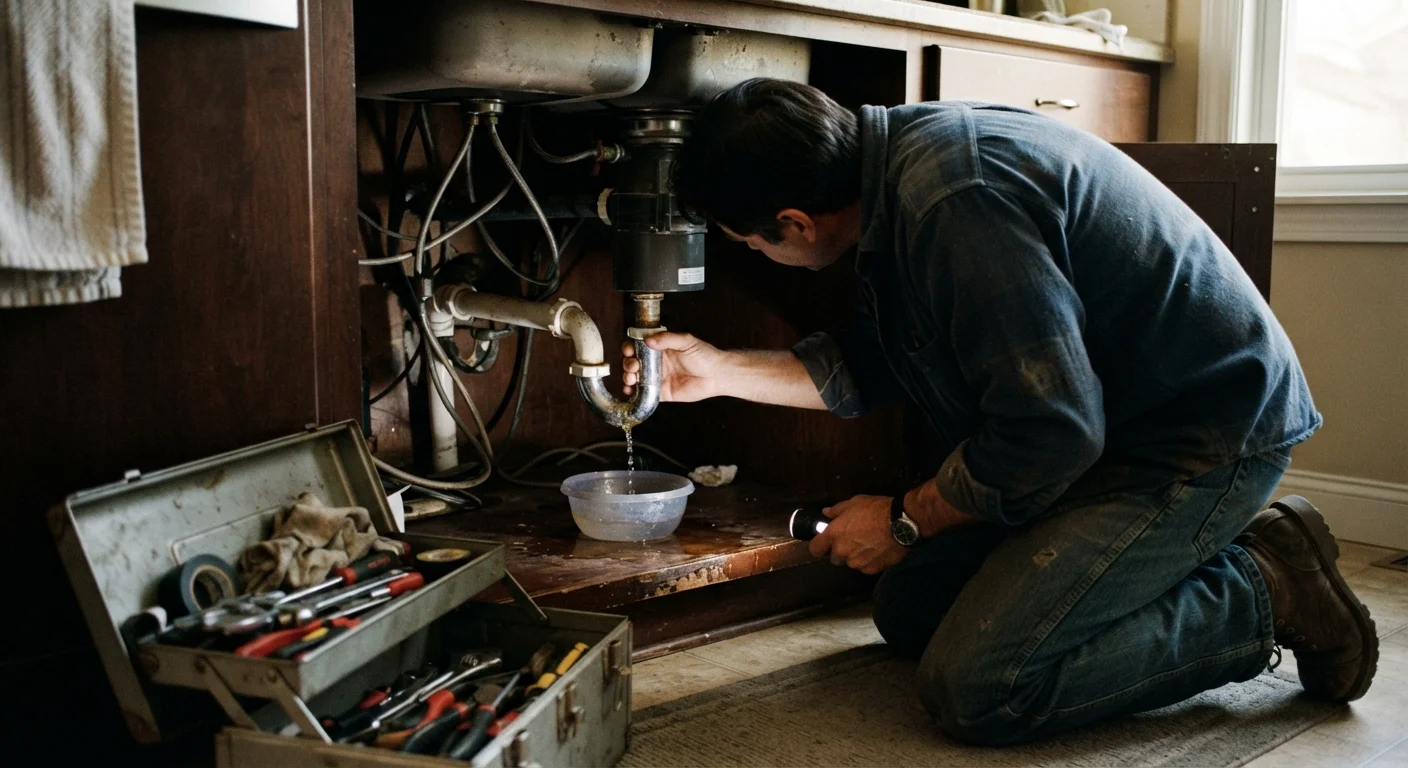
DIY home repairs can meaningfully lower household costs when the task is straightforward, low-risk, and within your demonstrated skill level. The savings shrink or disappear entirely when a botched job requires a professional to undo your work before doing it correctly, or when unpermitted repairs create liability down the road. The honest calculation includes your time, the cost of tools you may only use once, and the potential consequences of getting it wrong.
Homeowners or renters who are comfortable with basic hand tools, have time to research the job properly, and are tackling low-stakes repairs such as patching drywall, replacing faucet hardware, or fixing weatherstripping.
What DIY actually costs you
The appeal of doing a repair yourself is straightforward: you pay for materials, not labor. Because labor often makes up 35 to 50 percent of a contractor invoice, the savings on a simple job can be real. Replacing a bathroom faucet, patching a small drywall hole, or reseating a running toilet are tasks with low material costs and well-documented steps that many homeowners handle without incident.
The fuller picture includes costs that don't appear on a contractor's quote. Tools you don't already own can eat into savings fast, particularly if you'll only use them once. Your time has value too. How to weigh the time-versus-money trade-off is a practical framework worth applying before you commit a weekend to a repair that a plumber could finish in two hours.
There is also the cost of a failed attempt. A professional called in to correct a DIY gone wrong typically charges more than they would have for the original job, because they must first diagnose and undo the damage.
Jobs that generally make sense to DIY
Certain repairs consistently sit in the low-risk, high-reward category for capable homeowners. These share common traits: the materials are inexpensive, the process is reversible or forgiving, no permit is required, and video tutorials or manufacturer guides are plentiful.
Labor savings on straightforward jobs
Labor typically accounts for 35 to 50 percent of a repair bill. On a simple plumbing or carpentry task, handling the work yourself can cut the total cost by half.
Faster turnaround on minor repairs
Scheduling a contractor for a small job can take days or weeks. Doing it yourself means the repair happens when it needs to, which often prevents a small problem from worsening.
Builds practical household knowledge
Understanding how your home's systems work makes it easier to describe problems accurately to professionals, catch issues early, and evaluate quotes for larger jobs.
Allows flexible scheduling
You are not waiting on a contractor's availability, which matters when a failing weatherstrip or a dripping faucet is wasting energy or water every day it goes unfixed.
Weatherstripping, caulking around windows and tubs, replacing outlet cover plates, swapping light fixtures (after confirming power is off at the breaker), fixing squeaky floorboards with screws, and repainting interior walls are all tasks most adults can complete with modest preparation. Simple fixes that lower utility bills covers several of these in depth, including air sealing work that can reduce heating and cooling costs noticeably.
Routine maintenance, such as cleaning dryer vents, replacing HVAC filters, and checking caulk around fixtures, also falls into DIY territory. What happens when small maintenance tasks are skipped lays out the financial case for staying on top of these jobs.
Jobs that carry real risk
Not every repair is a good candidate for a self-help approach, and the downside of misjudging can be severe.
Safety risk on regulated or hazardous work
Electrical, gas, and structural repairs carry injury and property-damage risk that is difficult for a non-specialist to manage safely. These categories account for a large share of home fire and injury incidents each year.
Permits and codes may require licensed contractors
Many U.S. jurisdictions prohibit homeowners from performing certain repairs without permits and licensed tradespeople. Unpermitted work can complicate insurance claims and property sales.
Failed attempts multiply costs
A contractor called in to correct a DIY repair typically charges more than the original job would have cost, because they must first assess and undo incomplete or incorrect work.
Tool and material costs can erase savings
Specialized tools purchased for a single repair and materials wasted through inexperience can bring your out-of-pocket cost close to, or above, what a professional would have charged.
Time investment is often underestimated
A repair that takes a professional two hours can take an inexperienced homeowner most of a day, including research, supply runs, and troubleshooting unexpected complications.
Electrical work beyond swapping a light fixture, anything involving your main panel, adding circuits, or troubleshooting wiring inside walls carries shock and fire risk. In most U.S. jurisdictions, this work requires a permit and a licensed electrician. The same applies to gas line work, which can produce carbon monoxide exposure or explosion risk if fittings are disturbed incorrectly.
Structural repairs, including removing walls, sistering joists, or repairing foundation cracks, require an assessment of what is load-bearing before anyone touches anything. Roofing carries both fall risk and the complexity of ensuring watertight connections around penetrations. A roof that appears fixed but admits water at a flashing seam can cause mold and rot that costs far more than the original repair.
Permits matter more than most homeowners expect
Many repairs, including water heater replacements, electrical panel work, and window replacements in some jurisdictions, require a permit and inspection. Skipping permits is not just a code violation; it can void coverage on a related insurance claim and require disclosure to buyers during a home sale. Your local building or planning department is the authoritative source for what applies in your area. Checking takes minutes and can prevent significant problems.
Unpermitted work can also void your homeowner's insurance claim on a related loss, or require disclosure and remediation when you sell. Checking your local building department's permit requirements before starting takes minutes and can save significant complications.
Making the call: a practical checklist
Before starting any repair, four questions can help you decide whether DIY is appropriate for your situation.
- Does this work require a permit or a licensed trade in my jurisdiction? If yes, hire accordingly.
- Do I already own the tools, or will purchasing them still result in net savings?
- Can I find clear, authoritative instructions, and do I understand each step before I begin?
- If I make a mistake, can it be corrected at low cost, or does failure carry safety or structural consequences?
If the answer to question one or four is unfavorable, the math rarely favors DIY regardless of the labor savings on paper. A full review of your household spending, including what you are paying for professional services, fits naturally into a broader bill audit. Auditing your home bills is one place to start that process.
DIY repairs make the most financial sense when they are timely. A $12 wax ring that prevents a toilet from rocking saves the subfloor beneath it. Delay turns a twenty-minute fix into a flooring replacement job.
The content provided on our blog site traverses numerous categories, offering readers valuable and practical information. Readers can use the editorial team’s research and data to gain more insights into their topics of interest. However, they are requested not to treat the articles as conclusive. The website team cannot be held responsible for differences in data or inaccuracies found across other platforms. Please also note that the site might also miss out on various schemes and offers available that the readers may find more beneficial than the ones we cover.