

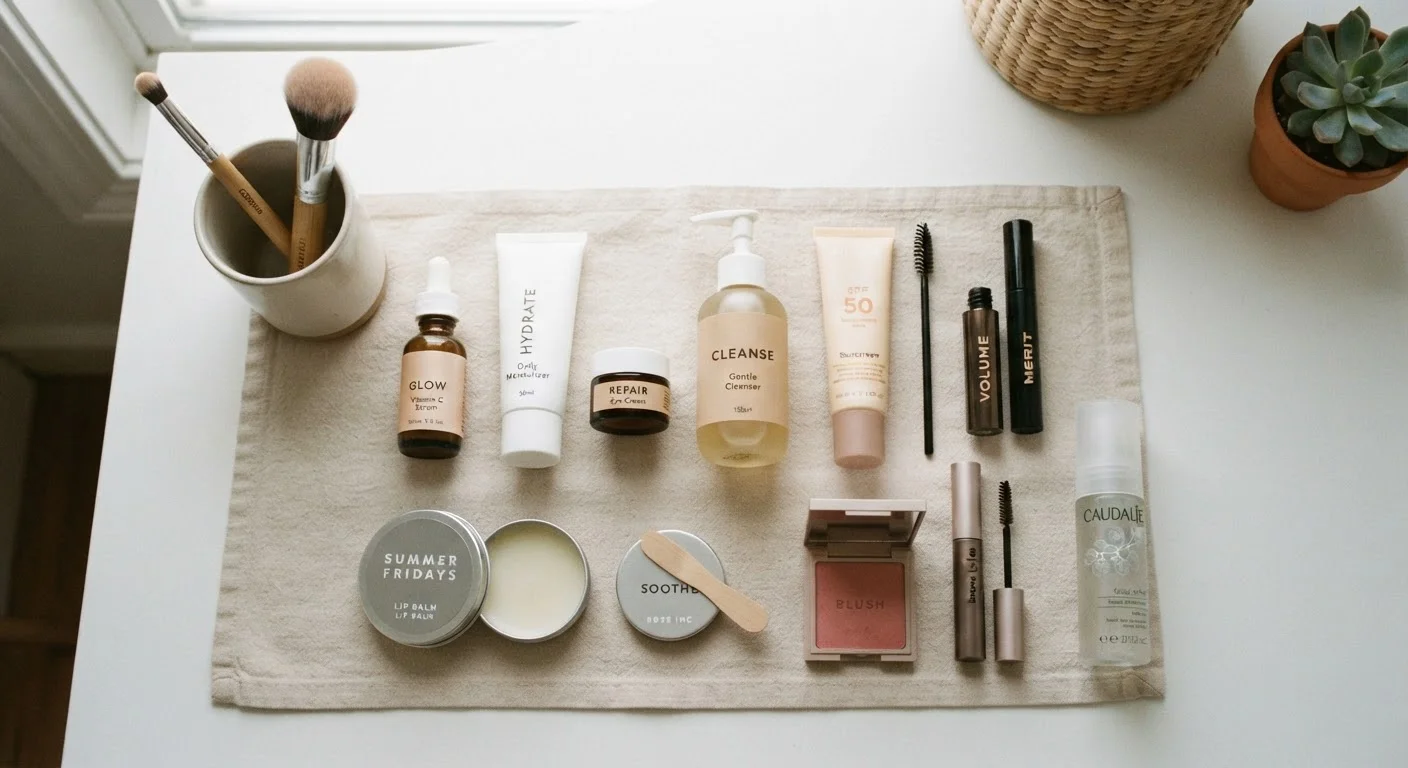
Why building a kit intentionally saves money
Most people accumulate beauty products rather than choosing them. A half-used toner here, a mascara bought on a whim there, and within a few months the bathroom shelf holds $80 worth of products that serve overlapping purposes. Building a kit intentionally flips that pattern: you decide what each product needs to do, then fill only those slots.
This approach works especially well when money is tight. Rather than reacting to sales or impulse grabs, you work from a list. A budget skincare routine depends on exactly this kind of deliberate selection, and the same logic scales to haircare and cosmetics.
The goal is a compact kit where every item earns its place. If you are not sure whether your current routine is too complicated or too sparse, the case for going minimal is worth reading before you start spending.
What you will need
What to do before spending anything
The first task is not shopping. Pull everything out of your current storage, line it up, and check expiry dates. Discard anything past its period-after-opening symbol (the small open-jar icon on packaging). Expired products can cause skin irritation, and keeping them creates clutter that makes budgeting harder.
Group what remains by function: cleansers, moisturizers, SPF, makeup, hair products. You may already have functional coverage in several categories. Write down what is genuinely missing, and that list becomes your actual shopping list.
Separately, set a monthly number you can afford. If you have not yet built a household spending plan, a walkthrough for building a monthly family budget will help you find a realistic figure before committing to product spending.
Audit what you already own
Remove every beauty and personal care product from storage. Check each one for expiry dates and visible changes in texture or smell. Discard anything expired or altered. Group remaining items by category: face care, body care, hair, and color cosmetics.
Identify your real gaps
Write down the functional categories where you have nothing usable: for example, no daily SPF, no mascara, no conditioner. These gaps are your actual shopping list. Do not add items you want but can manage without; add only what is genuinely absent.
Set a monthly category budget
Divide your total monthly beauty budget into subcategories: skincare, haircare, and cosmetics. Skincare generally warrants the largest share because it affects skin health directly. Cosmetics, which are optional, should get the smallest allocation. Write the numbers down and treat them as firm limits, not rough estimates.
Shop from the list, starting with skincare
Work through your gap list in order of necessity. A basic skincare setup covers four functions: cleansing, moisturizing, SPF, and (if needed) a targeted treatment such as a fragrance-free formula for sensitivity. Fill those before moving to hair or color products. For guidance on what each step actually requires, see this starter guide for first-time routine builders.
Add multipurpose items to cover remaining gaps
Once skincare slots are filled, look at your remaining budget and gap list. Choose products that cover more than one function where possible. A 2-in-1 shampoo and conditioner, a tinted lip balm, or a BB cream with SPF can each close multiple gaps with a single purchase, stretching the remaining budget further.
Record what you bought and when
Write down each product, the date purchased, and approximately how long it is expected to last based on the size and your typical use rate. This record makes next month's budgeting easier because you will know what needs replacing and when, rather than discovering an empty bottle the morning you need it.
Choosing products that do more than one job
Once you have a list of gaps and a budget figure, prioritize products with more than one function. A tinted moisturizer with SPF covers three steps: hydration, light coverage, and sun protection. A conditioning shampoo removes the need for a separate conditioner if your hair is not heavily processed. A lip balm with a slight tint works as both treatment and color.
Multipurpose products are not always the right call. If you have oily skin, a heavy tinted moisturizer may not control shine the way a separate lightweight SPF would. Matching function to your actual skin type and hair texture matters more than chasing the product with the longest ingredient list.
Understanding what the price gap between drugstore and prestige products actually reflects can help you decide where spending more is genuinely justified and where it is not.
Start with skin type, not price
The most affordable product is still a waste of money if it does not suit your skin type. Before buying, confirm whether a formula is designed for oily, dry, combination, or sensitive skin. A cleanser that strips moisture works against dry skin regardless of cost. Matching product to skin type reduces the chance of buying something twice.
Maintaining the kit without the budget creeping up
Replace products one at a time as they run out, not before. Buying a backup before the current item is finished adds cost without adding value. Track what you use fastest: those are the products worth watching for price changes at your regular store.
Lifestyle factors also reduce how hard your kit has to work. Sleep, hydration, and stress management affect skin more than most products do, which means a consistent daily routine often matters more than the specific products in it.
If you find yourself pulling things off the shelf that you rarely use, a structured decluttering approach can clear the noise without costing anything. A tighter kit is easier to budget, easier to restock, and easier to use every day.
The content provided on our blog site traverses numerous categories, offering readers valuable and practical information. Readers can use the editorial team’s research and data to gain more insights into their topics of interest. However, they are requested not to treat the articles as conclusive. The website team cannot be held responsible for differences in data or inaccuracies found across other platforms. Please also note that the site might also miss out on various schemes and offers available that the readers may find more beneficial than the ones we cover.