

What a skincare routine actually needs to do
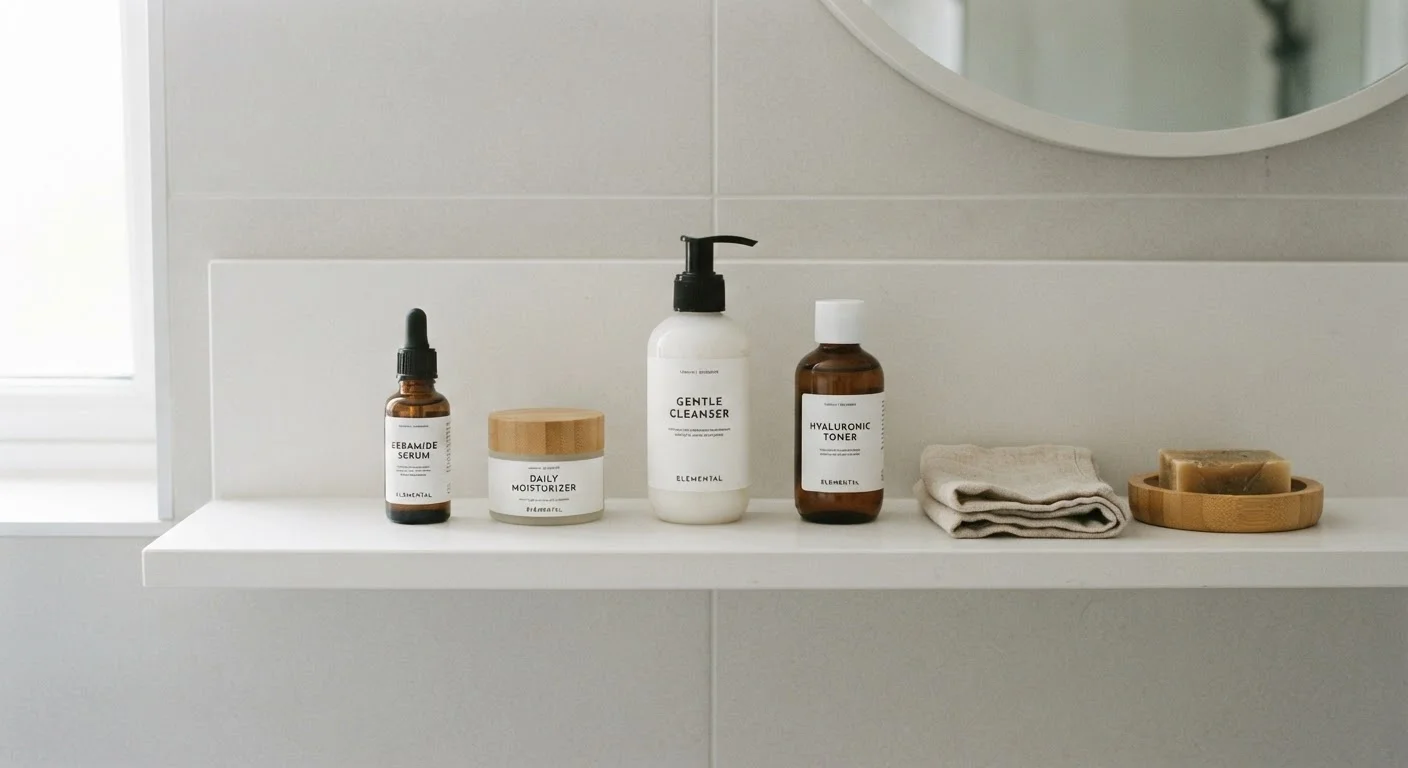
Strip away the marketing language and a skincare routine has three jobs: remove debris and excess oil, maintain the skin's moisture barrier, and shield it from UV damage. Every product category that matters maps to one of those jobs. Products that do not map to any of them are optional at best.
This framing matters because the skincare industry is large and profitable, and the shelf space at any drugstore suggests that routines need to be far more complex than the evidence supports. For most people without active skin conditions, a three-step morning routine and a two-step evening routine is enough. Anything added beyond that should answer a specific question: what problem is this solving?
If you want to see how this logic applies when building out a full beauty kit, the guide to building a complete beauty kit on a tight monthly budget covers how to prioritize what genuinely earns its shelf space.
The three non-negotiable steps
Cleanser. Cleansing removes sweat, sunscreen, makeup, and environmental pollutants that accumulate on the skin's surface. Over-cleansing is a common mistake: washing more than twice a day, or using a formula that strips natural oils, can disrupt the skin barrier and cause dryness or excess oil production as a rebound effect. A gentle, fragrance-free formula is sufficient for most skin types.
Moisturizer. Moisturizers help the skin retain water by either drawing moisture in (humectants such as glycerin or hyaluronic acid), sealing it in (occlusives such as petrolatum or dimethicone), or softening the skin surface (emollients). You do not need all three types in one bottle, but many affordable formulas combine them. People with oily skin often do better with a lighter, gel-based formula rather than skipping moisturizer entirely.
Sunscreen. Broad-spectrum SPF 30 or higher is the step with the most evidence behind it. UV exposure is the primary driver of premature skin aging and a major risk factor for skin cancer. Sunscreen applied in the morning does more for long-term skin appearance than any serum or treatment. It is also available at drugstore prices in formulas that work well under makeup.
Combine steps to save time and money
A moisturizer with built-in broad-spectrum SPF 30 or higher replaces two separate morning products. Many drugstore formulas offer this combination at a low price point. Check the active ingredients list to confirm the SPF is broad-spectrum before buying.
Optional steps and when they earn their place
Toners, serums, exfoliants, eye creams, and facial oils are not core steps. That does not mean they have no value, but each one should have a clear reason for being in a routine before money is spent on it.
A chemical exfoliant (typically with an AHA like lactic acid or a BHA like salicylic acid) can help with texture, clogged pores, or uneven tone, but using one two to three times per week is generally enough and more frequent use can irritate skin. An eye cream is largely a marketing category: a gentle moisturizer applied carefully around the eye area does the same job for most people. Serums with a defined active ingredient, such as vitamin C for antioxidant protection or niacinamide for oil control, can be useful when matched to a real concern.
The case for a minimal beauty routine explores the trade-offs of going even further and cutting the routine down to its smallest functional form.
3 steps
Core steps most dermatologists recommend
General dermatology guidance consistently points to cleanse, moisturize, and protect as the foundation of skin health for most people without active conditions.
4 to 6 weeks
Typical time for visible routine results
Skin cell turnover cycles generally run four to six weeks, meaning changes from a new product or routine take at least this long to become visible.
SPF 30+
Minimum recommended sun protection factor
The American Academy of Dermatology recommends a broad-spectrum sunscreen of at least SPF 30 for daily use, including on cloudy days.
Lifestyle factors that products cannot replace
No cleanser compensates for chronic sleep deprivation, and no serum matches what adequate hydration does for skin texture. Sleep, water intake, diet, and stress levels all affect how skin looks and functions. This is not a reason to skip a routine, but it is a reason not to overspend on products while ignoring the basics.
Consistent sleep supports skin repair cycles. Drinking enough water keeps cells functioning normally. A diet with sufficient protein and vitamins supports collagen production over time. Managing stress reduces flare-ups in conditions like acne and eczema. These factors cost little or nothing. Affordable self-care habits that support skin health covers the practical side of these lifestyle inputs in more detail.
If you are new to building a routine from scratch, the starter guide for first-time routine builders walks through each product category without overwhelming your budget or your shelf.
This article is for general informational purposes only and is not a substitute for advice from a qualified dermatologist or healthcare professional. People with active skin conditions should consult a licensed provider before changing their routine.
Frequently Asked Questions
The three steps with the most evidence behind them are cleansing, moisturizing, and applying a broad-spectrum SPF 30 or higher sunscreen in the morning. Everything else is optional and should address a specific concern you have identified.
Not reliably. Many drugstore formulas contain the same active ingredients as prestige products at a fraction of the cost. The <a href="/affordable-beauty/drugstore-vs-department-store-skincare-what-the-price-gap-actually-reflects">price gap between drugstore and department store skincare</a> often reflects packaging and marketing rather than formula quality.
Three products cover the basics for most people. You can add one or two targeted treatments if you have a specific concern like dryness or uneven tone, but a longer routine is not inherently more effective.
Sunscreen is generally recommended even for indoor days because UV rays can pass through windows. Applying it in the morning takes seconds and is the single step with the strongest evidence for preventing premature skin aging.
Yes. The morning routine centers on protection, so SPF is included. The evening routine focuses on cleansing away the day and supporting skin repair, so sunscreen is skipped but a slightly richer moisturizer or a targeted treatment can be added.
Skin cell turnover typically takes four to six weeks, so noticeable changes from a new routine usually appear after that window. Results vary by person and by the concern being addressed, and there are no guarantees.
The content provided on our blog site traverses numerous categories, offering readers valuable and practical information. Readers can use the editorial team’s research and data to gain more insights into their topics of interest. However, they are requested not to treat the articles as conclusive. The website team cannot be held responsible for differences in data or inaccuracies found across other platforms. Please also note that the site might also miss out on various schemes and offers available that the readers may find more beneficial than the ones we cover.