

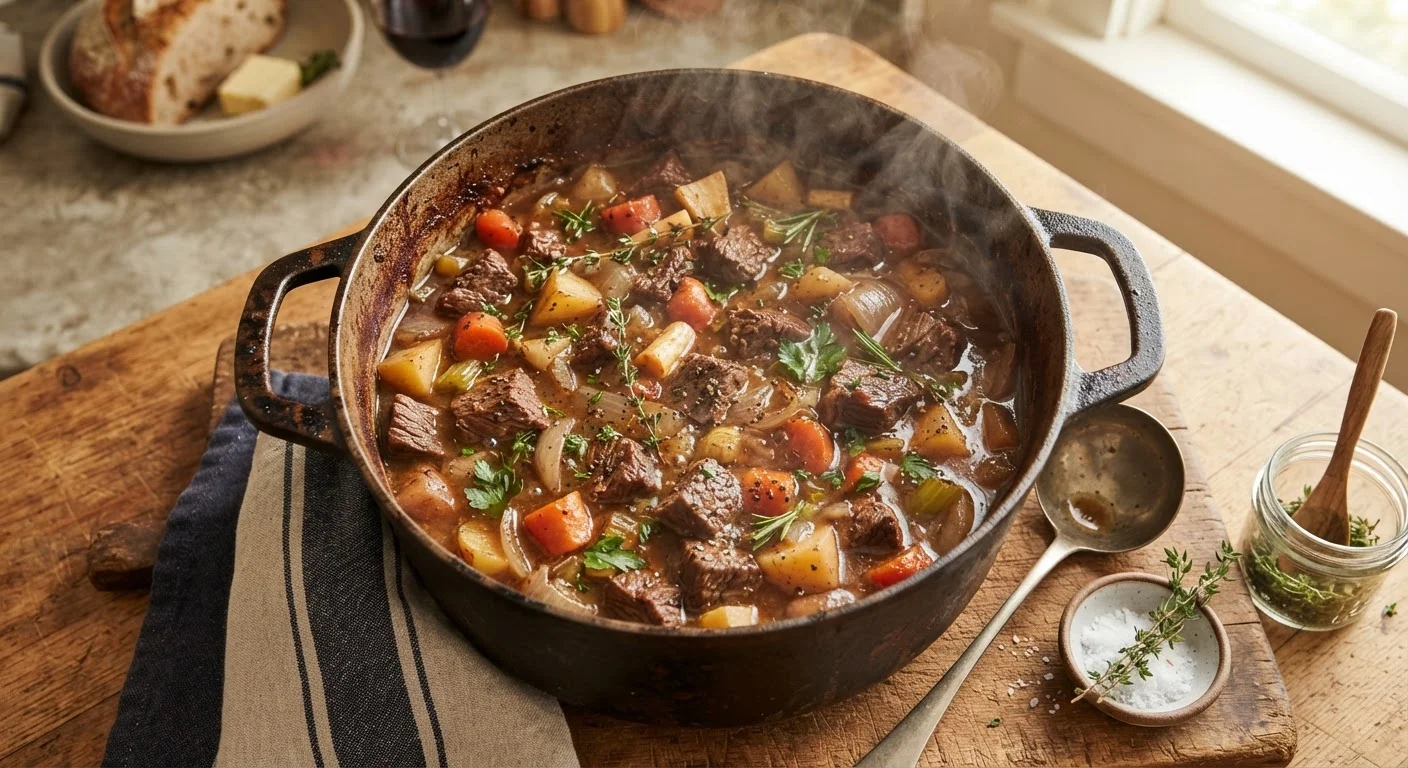
Why price and flavor do not move together
Most families assume the most expensive protein on the shelf is also the best-tasting one. That assumption drives a lot of grocery spending, but it does not hold up in the kitchen. Meat pricing is driven by tenderness, yield, and demand, not by flavor. A beef tenderloin is priced high because it is soft, requires little work from the diner, and comes from a small part of the animal. It is not priced high because it tastes more complex or satisfying than a braised chuck roast.
Flavor in meat comes from fat, connective tissue, and the way those compounds change under heat. Muscles that do more work during an animal's life accumulate more myoglobin and intramuscular fat, which is exactly what produces the deep, savory taste most people associate with a memorable meal. The shoulder, the leg, and the neck are all working muscles, and they are all cheaper to buy.
For families trying to eat well without overspending, understanding this gap is practical, not just interesting. See the starting guide to budget cooking for a broader look at how these principles fit into a full meal plan.
Myth
The most expensive cut of beef is the most flavorful.
Fact
Price reflects tenderness and low fat content, not flavor. Working muscles with more fat and connective tissue taste richer when cooked correctly.
Tenderloin and filet are priced for their soft texture, which comes from a muscle that does almost no work. That same low activity means less fat marbling and less myoglobin, both of which contribute to flavor. Chuck, brisket, and short ribs come from harder-working muscles with more intramuscular fat and collagen. Given enough time over low heat, those components produce a depth of taste that a quick-seared tenderloin simply cannot match.
Myth
Cheap cuts are tough and unpleasant to eat.
Fact
Toughness is a cooking problem, not a cut problem. The right method transforms connective tissue into gelatin and makes cheap cuts tender.
Collagen, the protein responsible for chewiness in cuts like shank or brisket, dissolves into gelatin when cooked low and slow, typically in a moist environment like a braise. The result is meat that pulls apart easily and a cooking liquid that becomes silky and thick. Cooking these cuts quickly over high heat produces exactly the tough result people fear, which is a mismatch of method and cut, not proof that the cut is inferior.
Myth
Boneless, skinless chicken breasts are the healthiest and best choice for families.
Fact
Chicken thighs provide comparable protein with more zinc and iron, and they cost less while staying moist under a wider range of cooking conditions.
Breasts are lower in total fat, which appeals to many shoppers, but thighs are not nutritionally poor by comparison. They provide slightly more zinc and iron per serving, and their higher fat content does not translate to a dramatically different calorie count per standard portion. For families with busy schedules where overcooking is a real risk, thighs are more forgiving and still deliver the protein a meal needs. The cost difference at the store adds up quickly across a month of grocery runs.
Myth
You need specialty equipment or advanced skills to cook budget cuts well.
Fact
A basic pot with a lid and a low oven temperature are enough. Most budget cut recipes require more time than skill.
Braising requires very little active technique. Brown the meat in a pot, add liquid to about halfway up the cut, cover, and place it in a 300-degree oven for two to four hours depending on size. The long, covered cook does the work. A slow cooker achieves the same result with even less monitoring. Neither requires culinary training. The most common mistake is using too high a heat or too little liquid, both of which are easy to avoid once a cook understands what the process is supposed to do.
How cooking method closes the gap
Cheap cuts require more time and lower heat, but the payoff is real. Collagen, the main connective tissue in cuts like beef shank, oxtail, and pork shoulder, melts into gelatin between roughly 160 and 180 degrees Fahrenheit when held there long enough. That gelatin thickens braising liquid, coats every bite, and produces the texture most people describe as falling apart in the best way. A prime rib roast, cooked the same way, would dry out and lose the very qualities that justify its price.
A slow cooker, a Dutch oven, or a covered pot in a low oven are all sufficient tools. None of them cost more to run than a standard weeknight dinner. The main input is time, and most braising recipes are largely hands-off once the lid goes on.
Chicken thighs are a reliable everyday example. They cost less per pound than boneless skinless breasts at most grocery stores, and they stay moist even if the cook walks away for an extra ten minutes. The higher fat content that keeps them forgiving also carries more flavor. The guide to stretching a whole chicken into five meals shows how to get the most out of both the thigh and the rest of the bird across a full week.
~40%
Typical price difference: chuck vs. ribeye per pound
USDA retail meat price data consistently shows chuck roast priced well below ribeye, often by a third to half, depending on region and store type.
2x
Collagen content in shank vs. loin cuts
Research in meat science literature shows shanks and other working-muscle cuts contain roughly twice the collagen of loin cuts, which converts to flavor-building gelatin during slow cooking.
What families should actually buy
A few cuts consistently deliver strong flavor at lower cost. Bone-in chicken thighs and drumsticks sit at the lower end of poultry prices. Beef chuck roast and beef shank are far cheaper per pound than ribeye or strip steak and produce better results in a long braise. Pork shoulder, sometimes sold as Boston butt, is among the most forgiving cuts in any grocery case. Ground beef labeled 80/20 (80 percent lean, 20 percent fat) browns with more flavor than 93/7 and usually costs less.
Organ meats such as chicken livers are even cheaper and are nutritionally dense, though they require a family willing to try something unfamiliar. Lamb neck and beef cheeks appear in some stores and are worth asking for at a butcher counter; both braise well and cost a fraction of lamb chops or tenderloin.
None of this means premium cuts have no place. A good steak for a birthday dinner is a reasonable choice. The point is that cheap cuts are not a consolation prize. For weeknight meals and batch cooking, they often produce food that tastes better than what a higher spend would have bought.
The content provided on our blog site traverses numerous categories, offering readers valuable and practical information. Readers can use the editorial team’s research and data to gain more insights into their topics of interest. However, they are requested not to treat the articles as conclusive. The website team cannot be held responsible for differences in data or inaccuracies found across other platforms. Please also note that the site might also miss out on various schemes and offers available that the readers may find more beneficial than the ones we cover.