

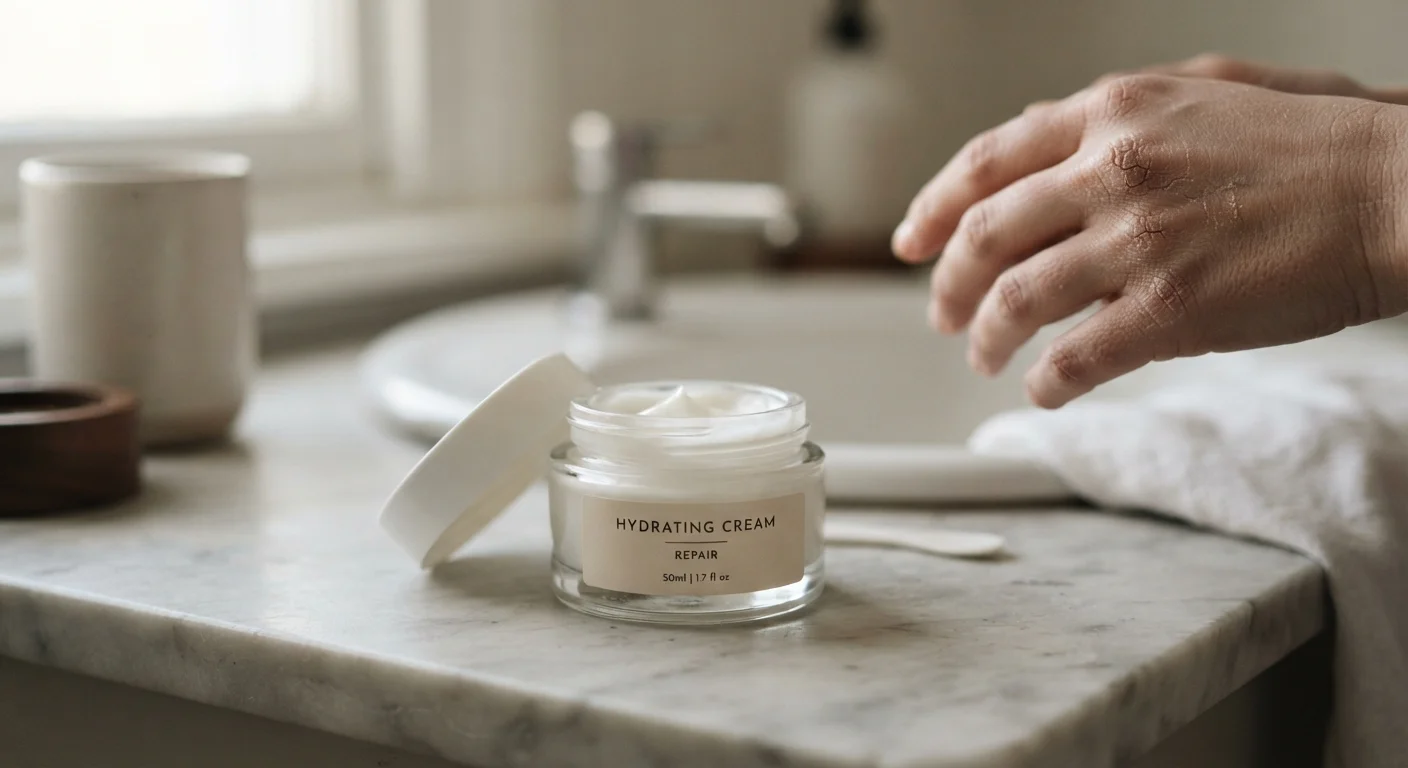
What 'not working' actually means
When readers say their moisturizer stopped working, they usually mean one of two things: their skin feels dry again within hours, or it no longer looks plump and smooth after application. These two problems have different causes, so the fix depends on which one you are experiencing.
Moisturizers work through three general mechanisms: occlusives (which seal moisture in), humectants (which draw water into the skin), and emollients (which smooth and soften). A formula that leans heavily on one type may work well in humid weather and fall short in winter when the air is drier. That is not the product failing. That is a mismatch between the formula and the conditions.
Before changing anything, spend a week tracking when the dryness appears. Is it worse after showering? By afternoon? After a flight? Timing narrows down the real cause faster than any ingredient swap.
Common mistakes that reduce moisturizer performance
Applying moisturizer to completely dry skin instead of damp skin.
Why it happens: Most people pat their face fully dry after washing before reaching for their moisturizer, because that is the intuitive order.
Using a formula designed for one season in completely different weather conditions.
Why it happens: People find a product they like and stick with it year-round without accounting for how much climate affects skin moisture levels.
Over-exfoliating and then expecting moisturizer to compensate for the damage.
Why it happens: Exfoliation is widely promoted as the solution to dull or congested skin, so many people do it more often than their skin tolerates.
Taking long, hot showers immediately before applying moisturizer.
Why it happens: Hot water feels good and seems thorough, but it strips the natural oils that help the skin retain moisture between applications.
Not drinking enough water and expecting topical products to offset internal dehydration.
Why it happens: Skincare marketing often frames moisturizers as the complete solution to dry skin, which leads people to overlook hydration from the inside.
Cycling through new products every few weeks before they have time to show results.
Why it happens: The constant flow of new product launches and social media recommendations makes it tempting to try the next thing before giving the current one a fair trial.
Most of these errors are inexpensive to correct. You rarely need to buy a new product to fix the problem.
When your routine needs a real adjustment
Do not layer more products to fix a broken barrier
When skin feels persistently dry or irritated, adding serums, actives, and extra moisturizer layers often makes things worse. A compromised barrier is more permeable, meaning irritants penetrate more easily. Simplify your routine to cleanser and one moisturizer while your barrier recovers, then reintroduce other steps one at a time.
If correcting the mistakes above does not improve things within two to three weeks, consider two possibilities. First, your skin type may have shifted. Hormonal changes, medication, significant weight changes, and aging all alter how much oil your skin produces and how quickly it loses water. A lightweight lotion that worked at 25 may not provide enough occlusion at 45.
Second, an underlying condition such as eczema, contact dermatitis, or thyroid dysfunction can cause dryness that no topical product fully addresses. If your skin is also itchy, inflamed, or visibly irritated, consult a dermatologist rather than continuing to troubleshoot alone. Topical moisturizers are general skincare tools, not treatments for medical conditions.
This article is for informational purposes only and does not constitute medical or dermatological advice. Consult a qualified healthcare professional for persistent or severe skin concerns.
The content provided on our blog site traverses numerous categories, offering readers valuable and practical information. Readers can use the editorial team’s research and data to gain more insights into their topics of interest. However, they are requested not to treat the articles as conclusive. The website team cannot be held responsible for differences in data or inaccuracies found across other platforms. Please also note that the site might also miss out on various schemes and offers available that the readers may find more beneficial than the ones we cover.